


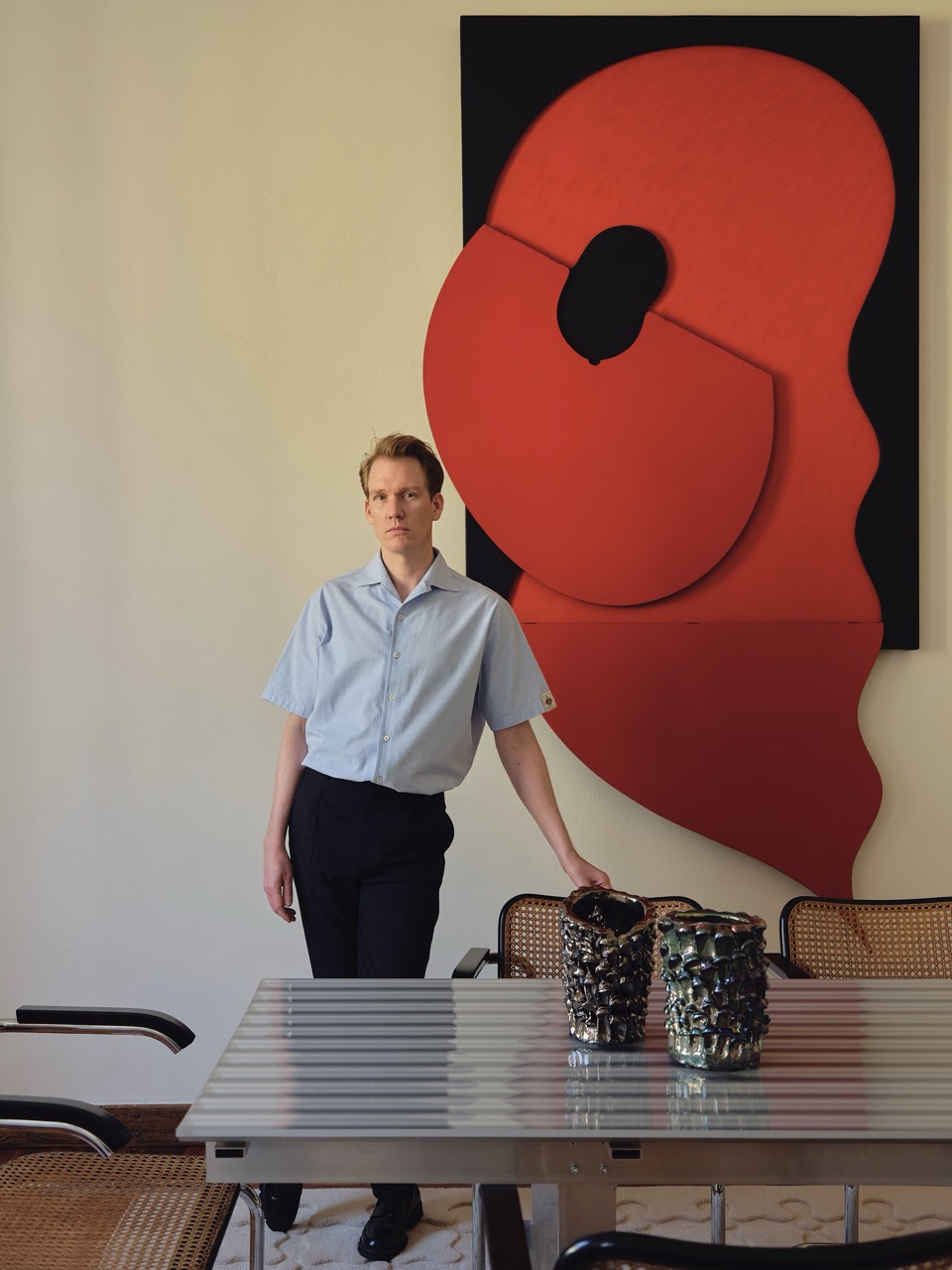
Having lived in various international art hubs, from New York to London, from Paris to Milan, Truls Blaasmo has synthesized his professional experiences as independent curator and art advisor into his own art collecting. His extensive international experience working within the arts and luxury industries throughout Europe, China, the UAE, and the US eventually nourishes his art collection, which he treats as a kind of ongoing domestic experiment in his apartments in Milan and Paris.
LARRY’S LIST spoke with Truls about the moment he fell in love with a work by Burri, how emotion is always the first thing that guides him to an art purchase, his experience of living in cities different art scenes, and the circumstances when brand partnerships can be exciting.
Collecting
What made you want to start collecting art? What is the main motivation behind your collecting?
It was back in the time when I lived in NYC, I became friends with a younger generation of individuals who collected art. I was also in the same social circle of a great group of artists in my early days in London. Collecting was a way of conversing with my friends. We would discuss the pieces and each other’s practice.
When did you fall in love with a piece of art? What was it?
There was a moment when I gained first-hand access to an extraordinary Burri where something shifted. There I really understood the greater meaning and purpose, as well as the direction of my career path in the arts.
What is your focus regarding the artists in your collection? Are you more interested in emerging or renowned artists?
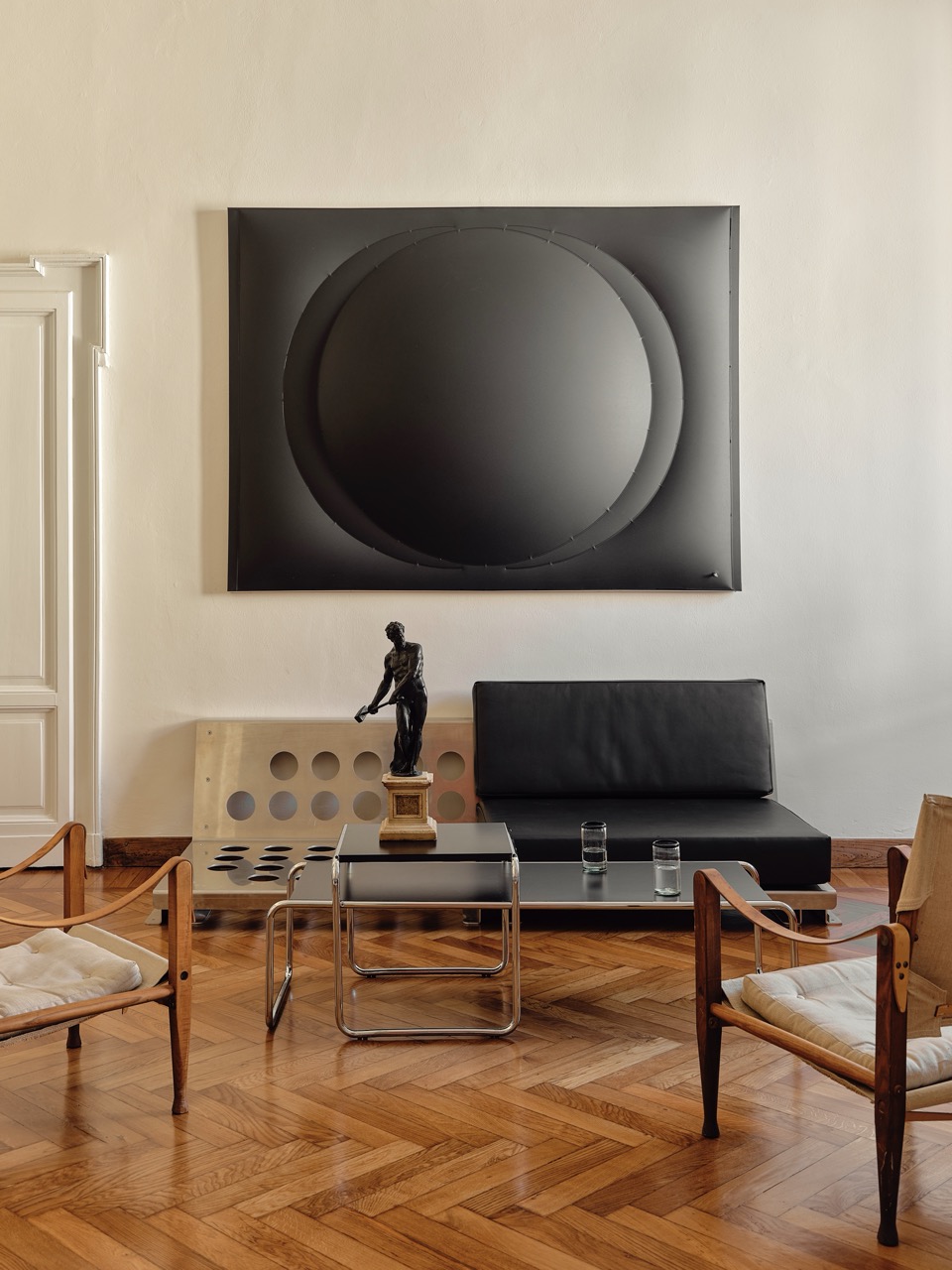
The real dynamic, for me, happens when artists of different generations coexist, when they are in genuine conversation with one another rather than housed in separate categories. There is something about drawing lines between generations that often catches my attention. You would not see me only doing either-or in my curatorial practice.
What kind of art has consistently attracted you? What is the theme that unites all the works you have acquired?
Very early in my career, I was exposed to so many wonderful Arte-povera collections, I still discover new things and connections of that period today. In a world where so much is available to us day to day. It’s often nice to be reminded of the things created by the simplest things.
How many artworks do you own? Where do you display your collection?
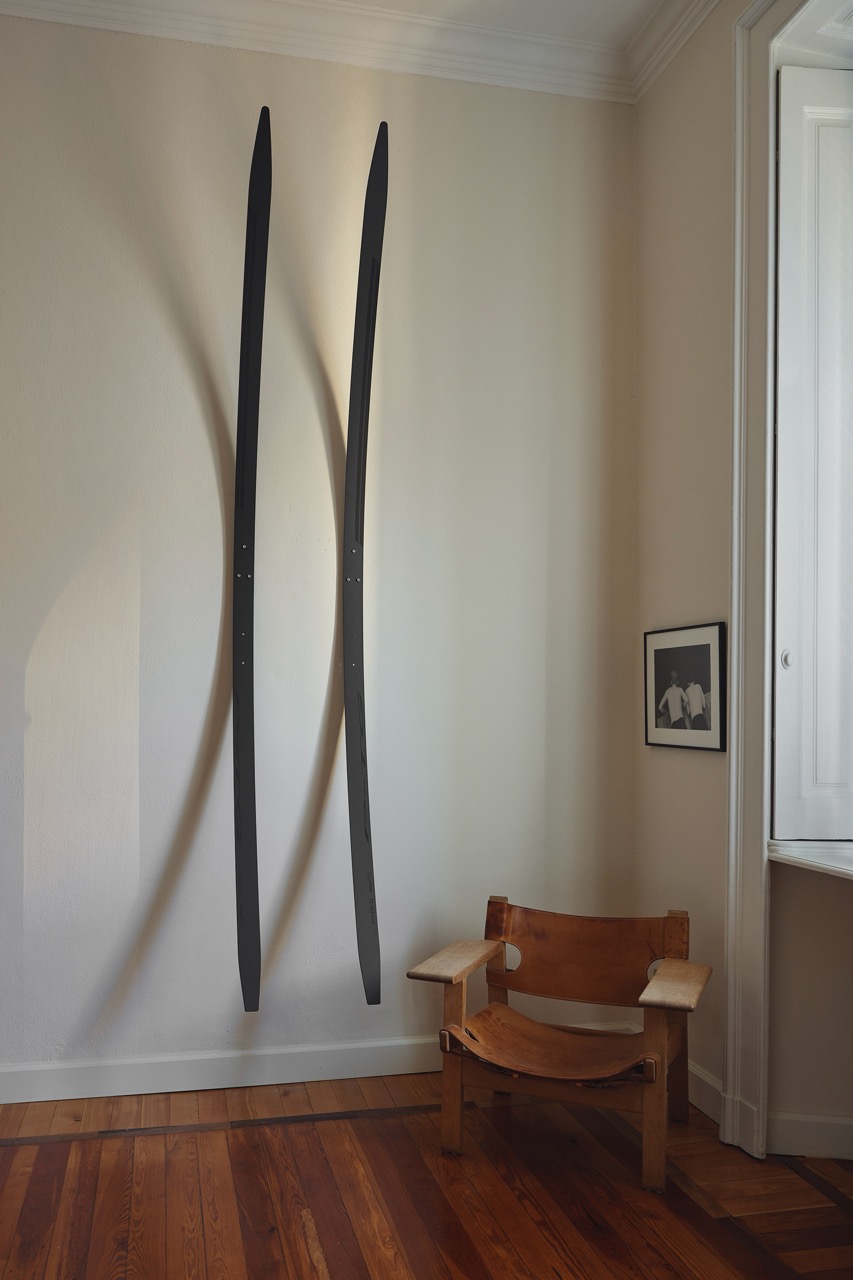
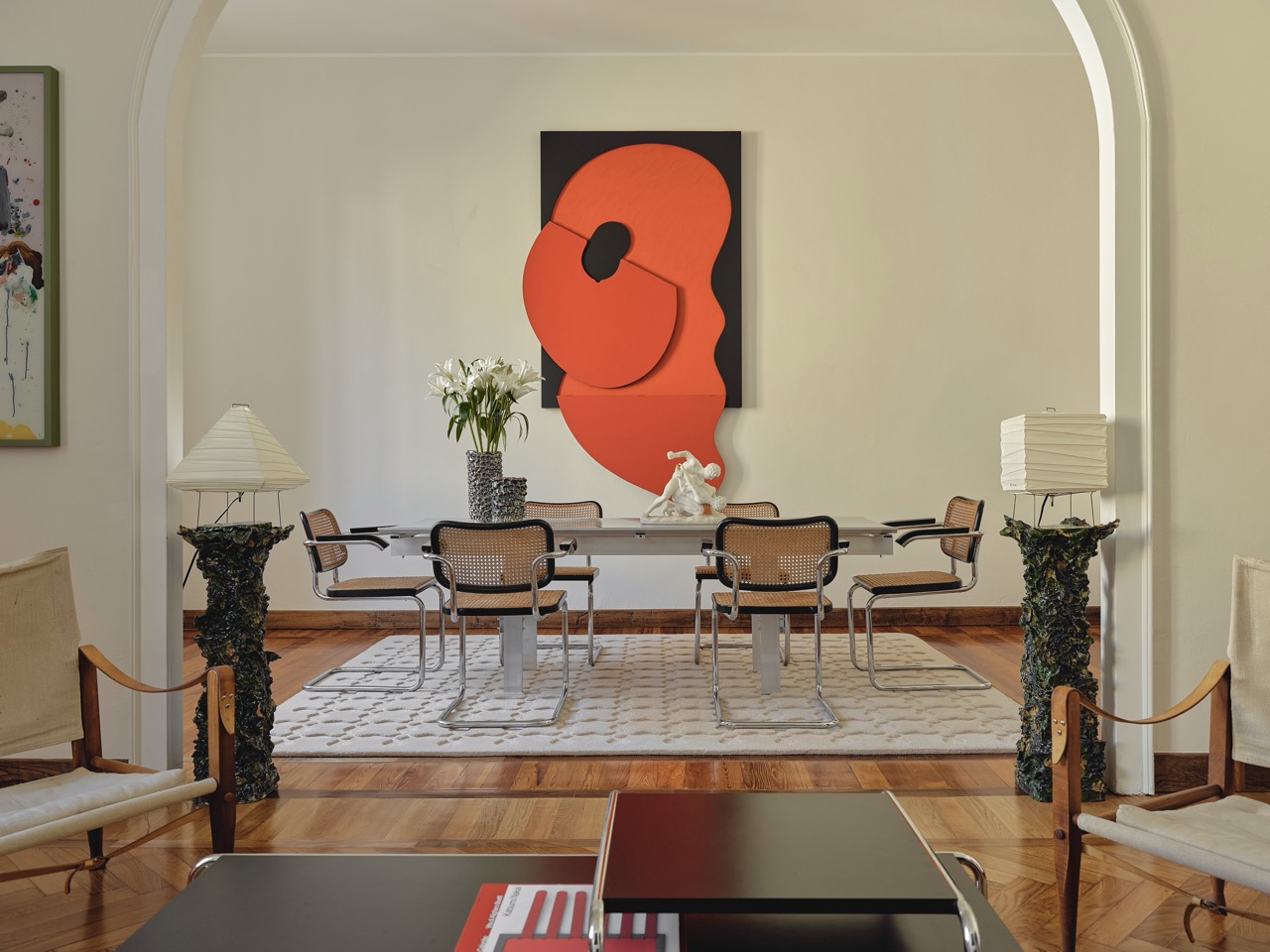
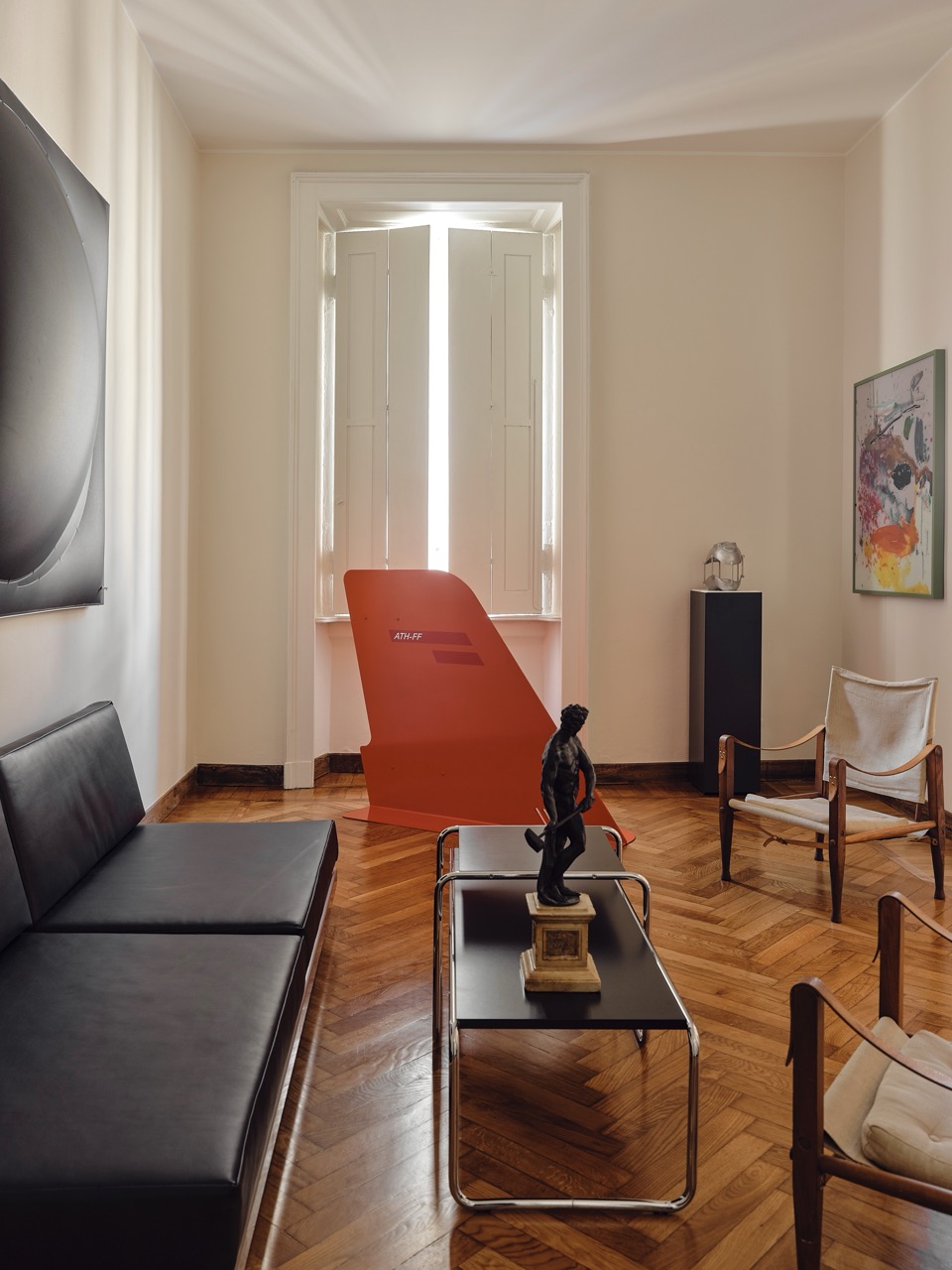
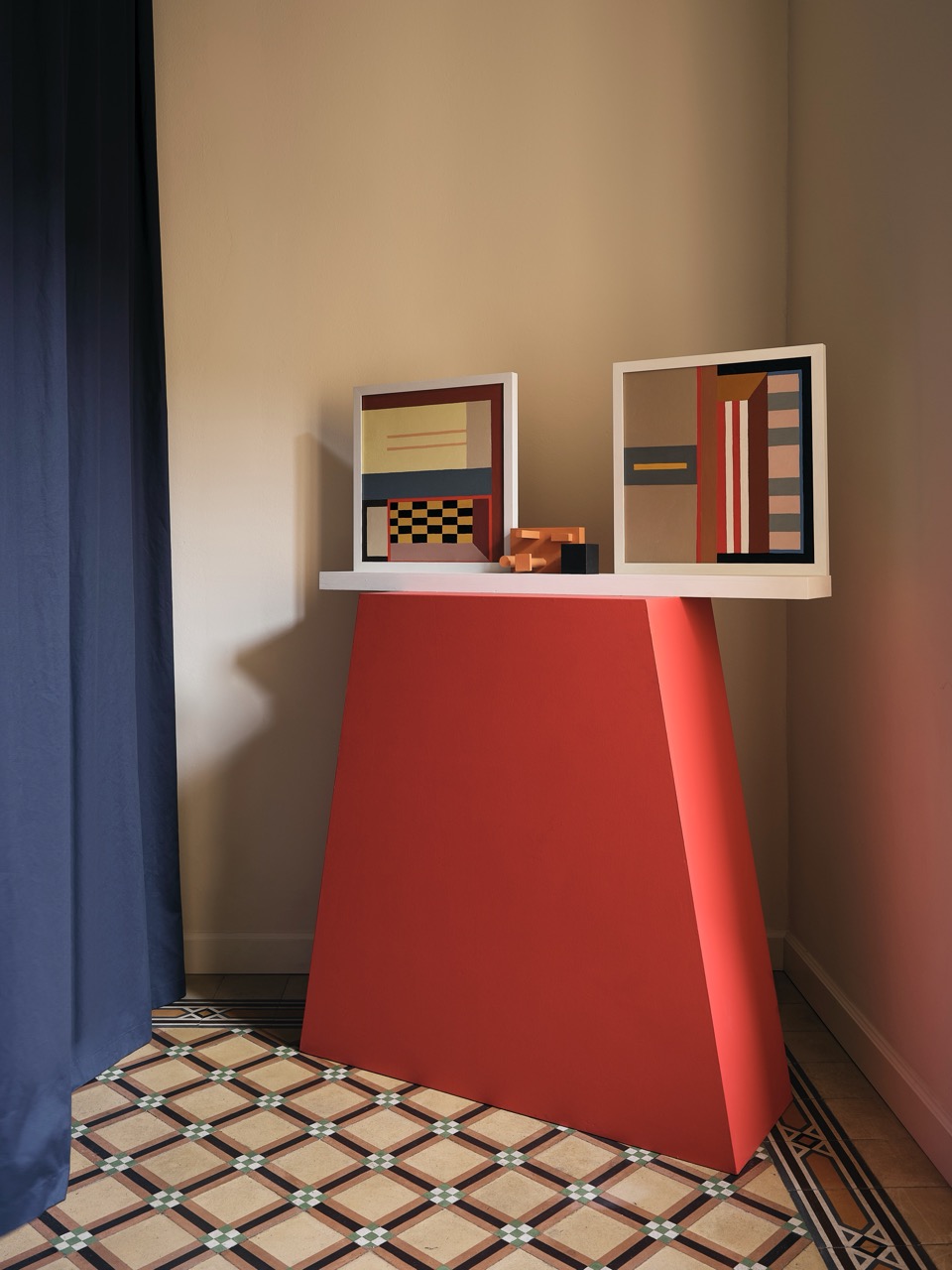
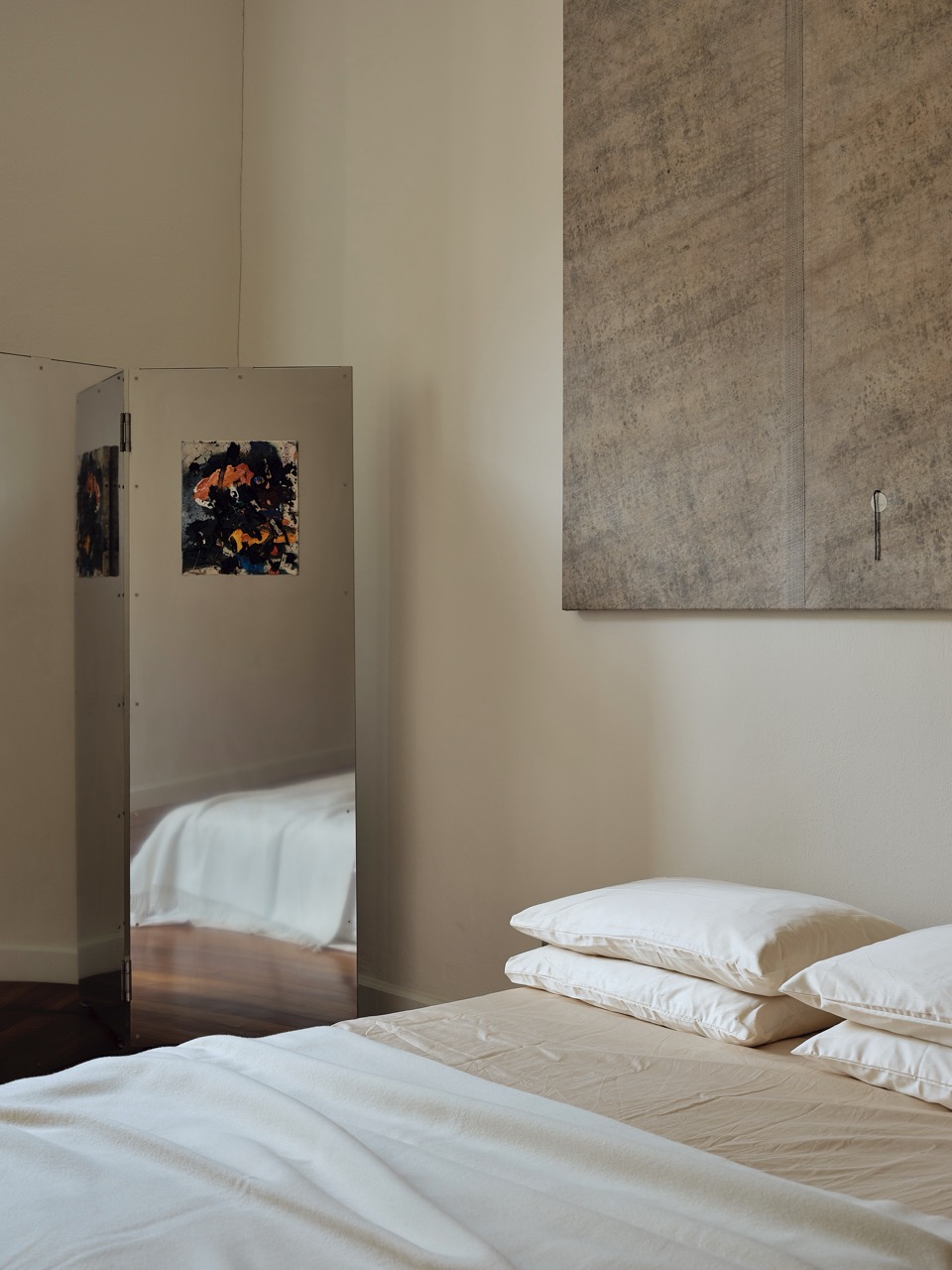
I don’t think in numbers, I think in relationships between works. My apartments in Milan and Paris have become a kind of ongoing domestic experiment, something between a living space and a gallery. I’m genuinely interested in how a piece behaves differently depending on what it’s next to, what light it lives in, what moment you encounter it.
Would you wish to present your art collection publicly?
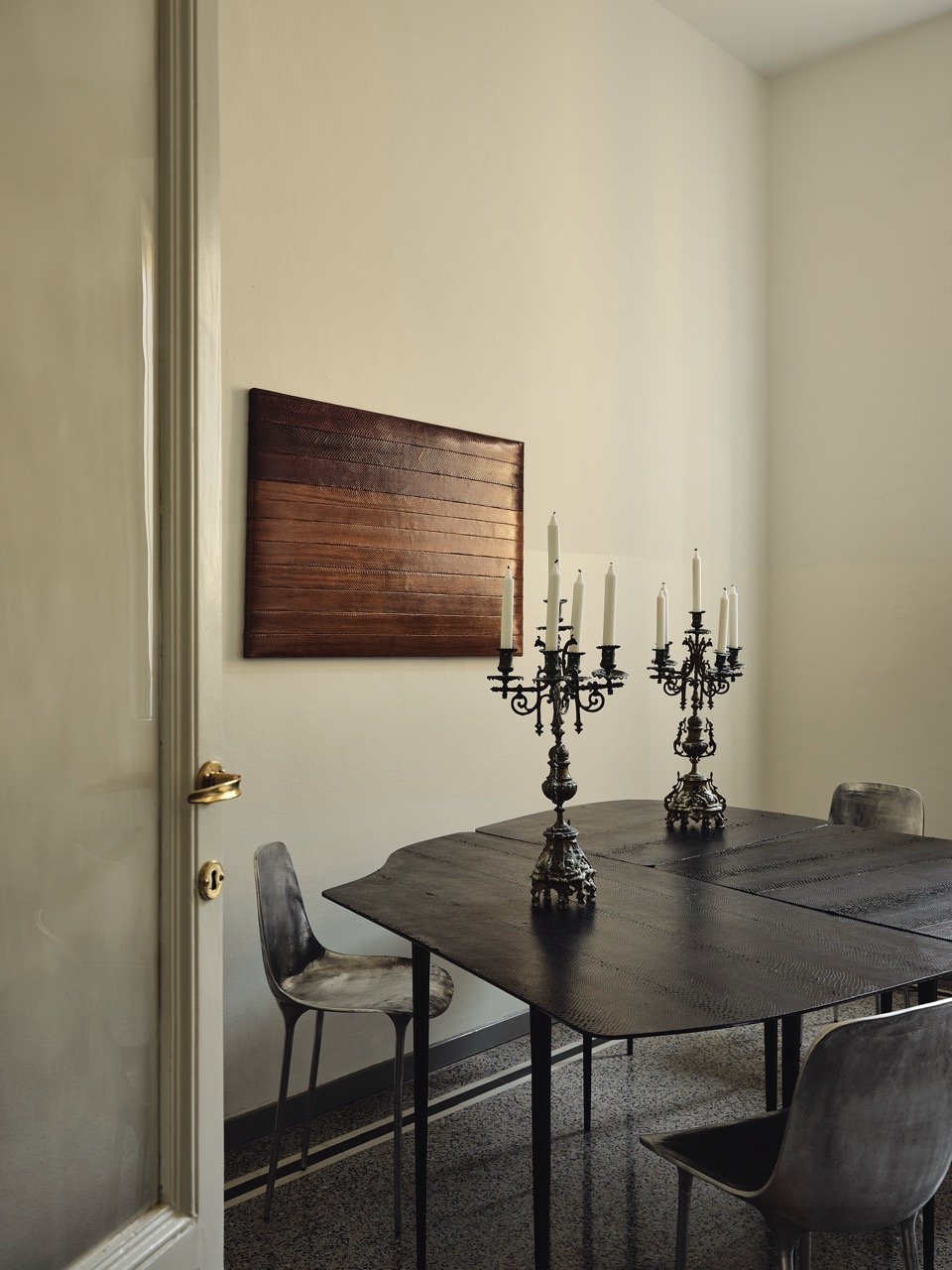
I’ve always felt that the most honest way to present a collection is in the context in which it actually lives, not under institutional lighting, but in the conditions of daily life. What would matter to me is that the curatorial gesture feels genuine, not performative. A collection shown publicly should reveal something about the collector’s mind and about the works in dialogue.
What considerations guide you to make a purchase?
Emotion first always. I need to feel something before I think anything. That said, I don’t acquire impulsively. After the initial response, I ask myself whether the work holds up over time: whether it continues to demand attention, whether it sits comfortably or creates a productive tension within what I already own. I also think about the artist’s trajectory not in a market sense, but in terms of their commitment to their practice. Consistency of vision is something I deeply respect.
What kind of artwork can make you write a cheque without any consideration?
Work that makes me feel I have no choice. It’s happened very few times—a kind of inevitability. With Burri, I understood it immediately. There have been a handful of others. You know it when the idea of not having it becomes genuinely uncomfortable.
How important is it for you to meet the artists who created the artwork?
It depends enormously on the work. For living artists, the relationship matters to me not because it changes my reading of the piece, but because understanding how someone inhabits their practice deepens everything. For historical work, I try to let the object speak, yet, knowing the intellectual and political context is inseparable from the experience.
Through what channels do you discover artists and artworks?
Everywhere, genuinely. Discovery also happens in conversation, in unexpected institutional contexts, through the artists I already work with pointing me toward others. I’ve never been someone who relies on a single channel. The art world is too interconnected for that, and the most interesting finds are rarely the obvious ones.
The Art World
What was your happiest moment being involved in art?
It’s less a single moment and more a recurring one: when I see a work land exactly where it should. Whether that’s a collector encountering a piece that genuinely changes how they see their collection, or a brand partnership that produces something neither party could have arrived at alone, or an exhibition where the spatial and emotional logic comes together in a way that surprises even me. When someone understands, through an object or an experience, something they were not quite able to articulate before. That’s what I always work toward.
Who inspires you the most in the art world?
I’m consistently drawn to people who operate with genuine independence of vision, curators, collectors, and artists who haven’t allowed the market or institutional pressure to dilute what they’re trying to say. People who remain curious at every stage of their career, who are still genuinely moved by things. That’s rare.
You have lived in several different cities before. Which art scene is your favorite?
Each city gave me something irreplaceable. London gave me access and an understanding of the international market and how to move within it. New York gave me pace and a particular kind of intellectual generosity among younger collectors. Paris showed me how a city can hold centuries of cultural production while always reinventing itself. Milan infused in me the Italian relationship to materiality which you feel in everything from architecture to conversation. I cannot choose just one.
What are you especially excited about regarding art in the next 12 months?
I’m paying close attention to how physical space is being reconsidered as a curatorial tool not just the white cube, but genuinely site-specific environments where the architecture is part of the meaning. I’m also watching the continued evolution of brand partnerships with real curiosity: when they’re done with integrity, they can create access and reach what institutional programming simply cannot. The question is always whether the cultural ambition is genuine. When it is, the results can be remarkable.
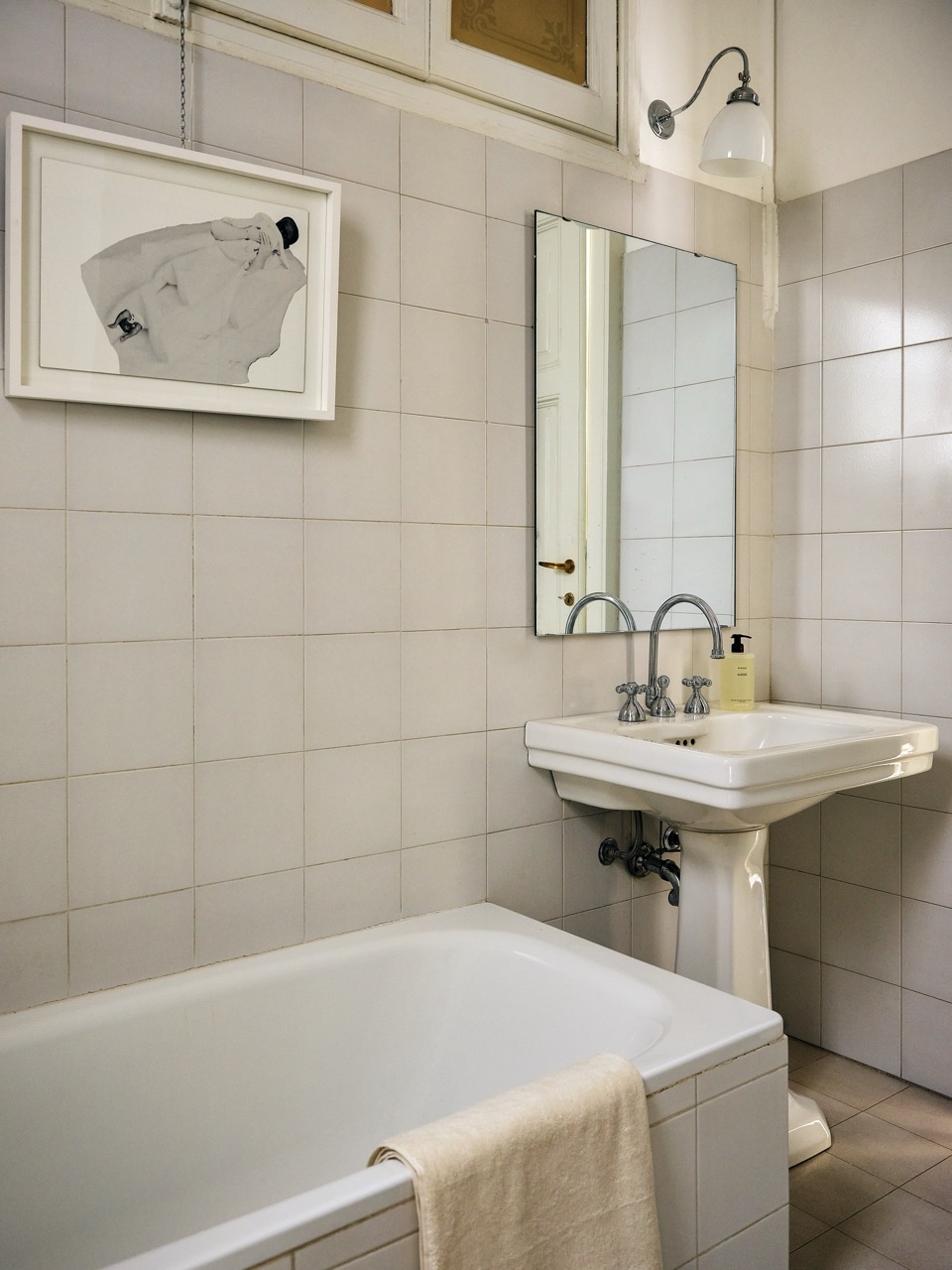
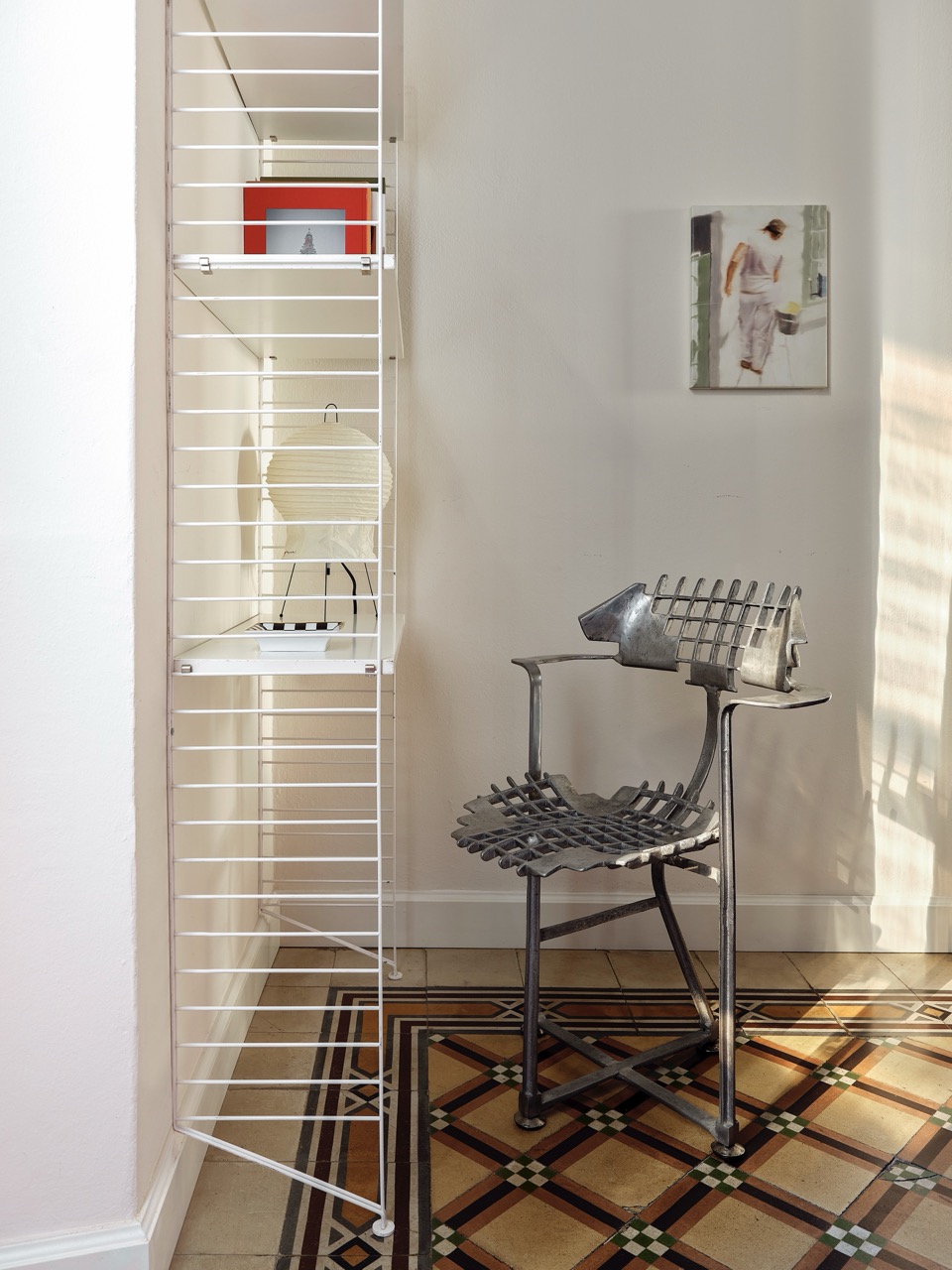
All images by Giulio Ghirardi, courtesy of Truls Blaasmo
Truls is one of the 120+ collectors featured in our latest Next Gen Art Collector Report. Please purchase the report here.
Related: Truls Blaasmo
Instagram: @trulsblaasmo
A selection of artists Truls collects:
Daisy Parris
Frida Orupabo
Katsumi Nakai
Sascha Hut
Tim Garwood
By Ricko Leung
