


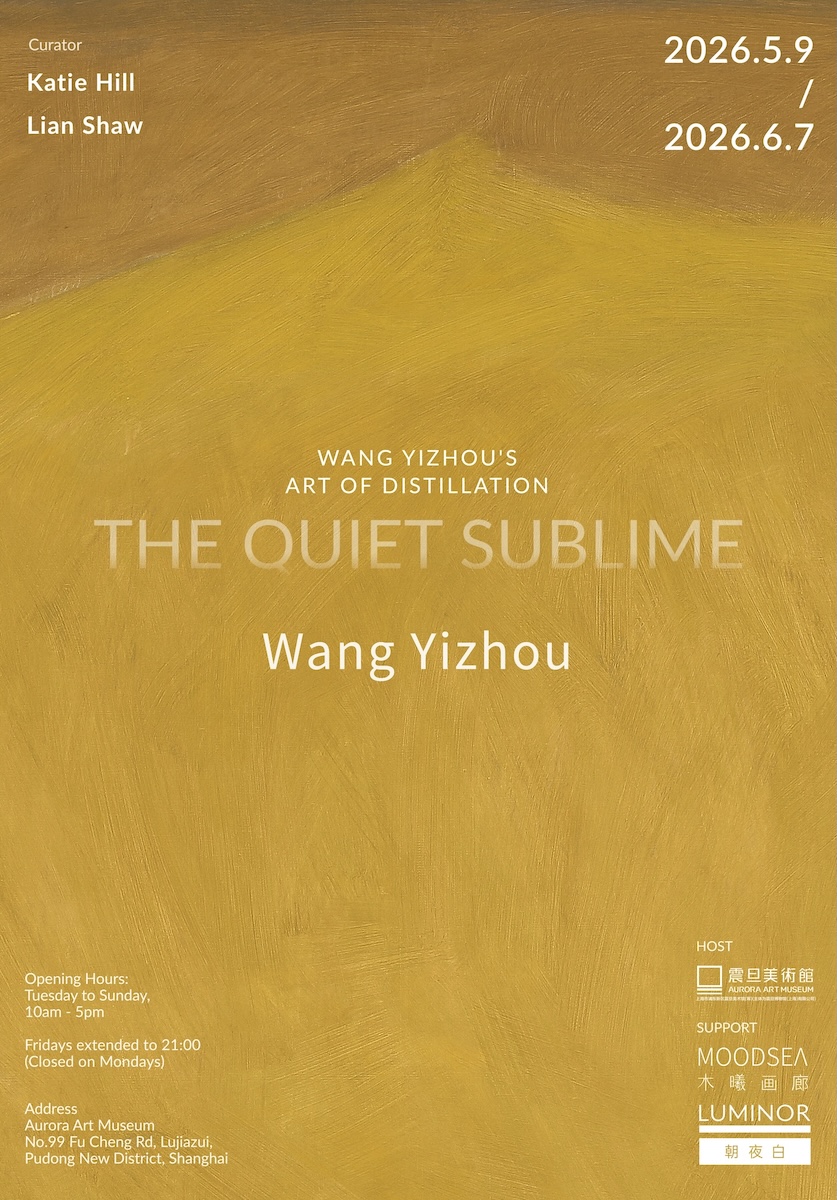
From 9 May to 7 June 2026, Aurora Art Museum in Shanghai presents “The Quiet Sublime,” a solo exhibition by artist Wang Yizhou. Co-curated by Dr. Katie Hill, founder of the Office of Contemporary Chinese Art (OCCA) and Academic Lead of Asia Sotheby’s Institute of Art London, and Lian Shaw, Artistic Director of London LUMINOR and Founder of Moodsea Gallery, the exhibition brings together over seventy works spanning the 1990s to the present, encompassing oil on canvas, ink on paper, video, installation, and mixed media with the “line” as its central axis. It represents the most comprehensive survey of the artist’s practice to date.
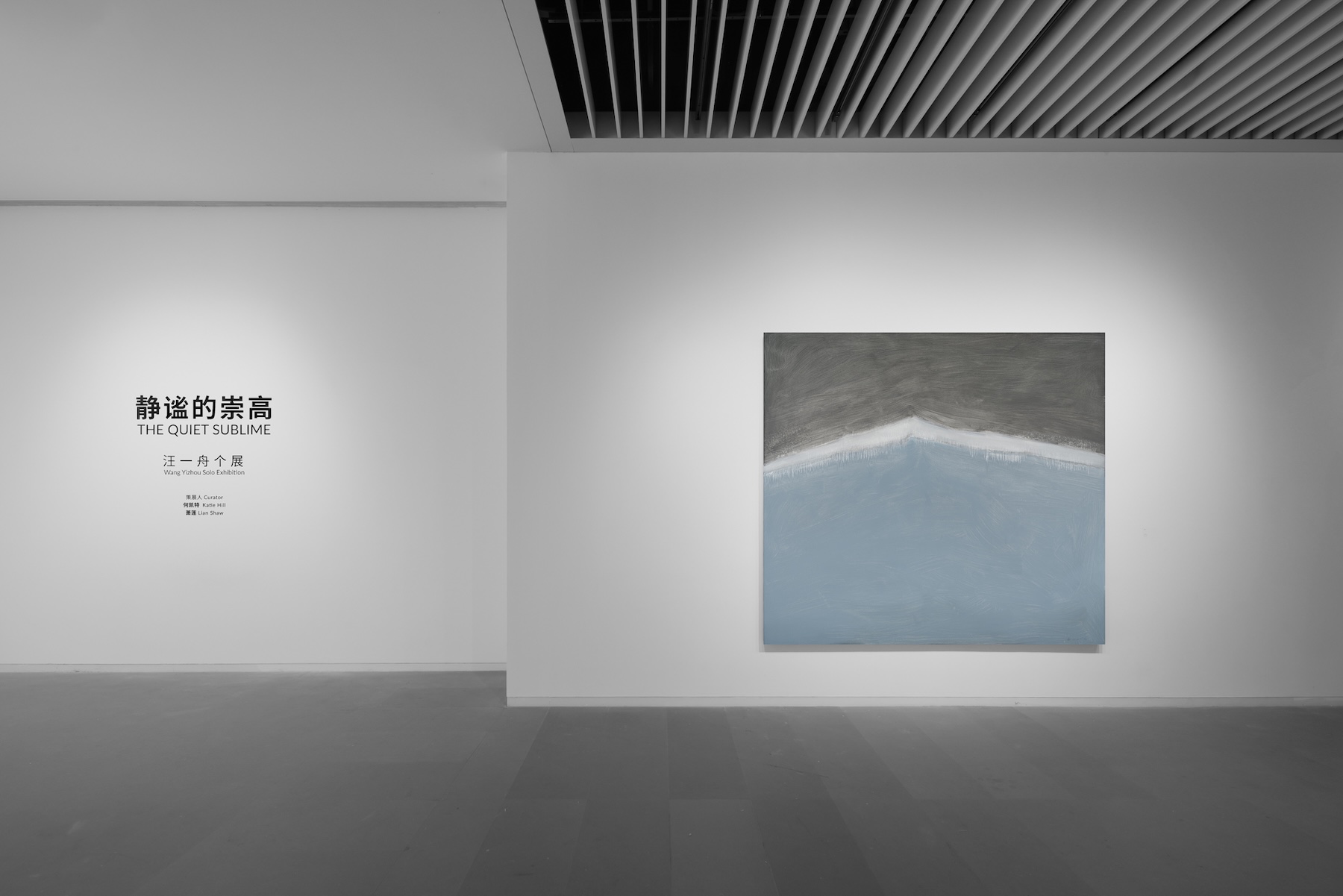
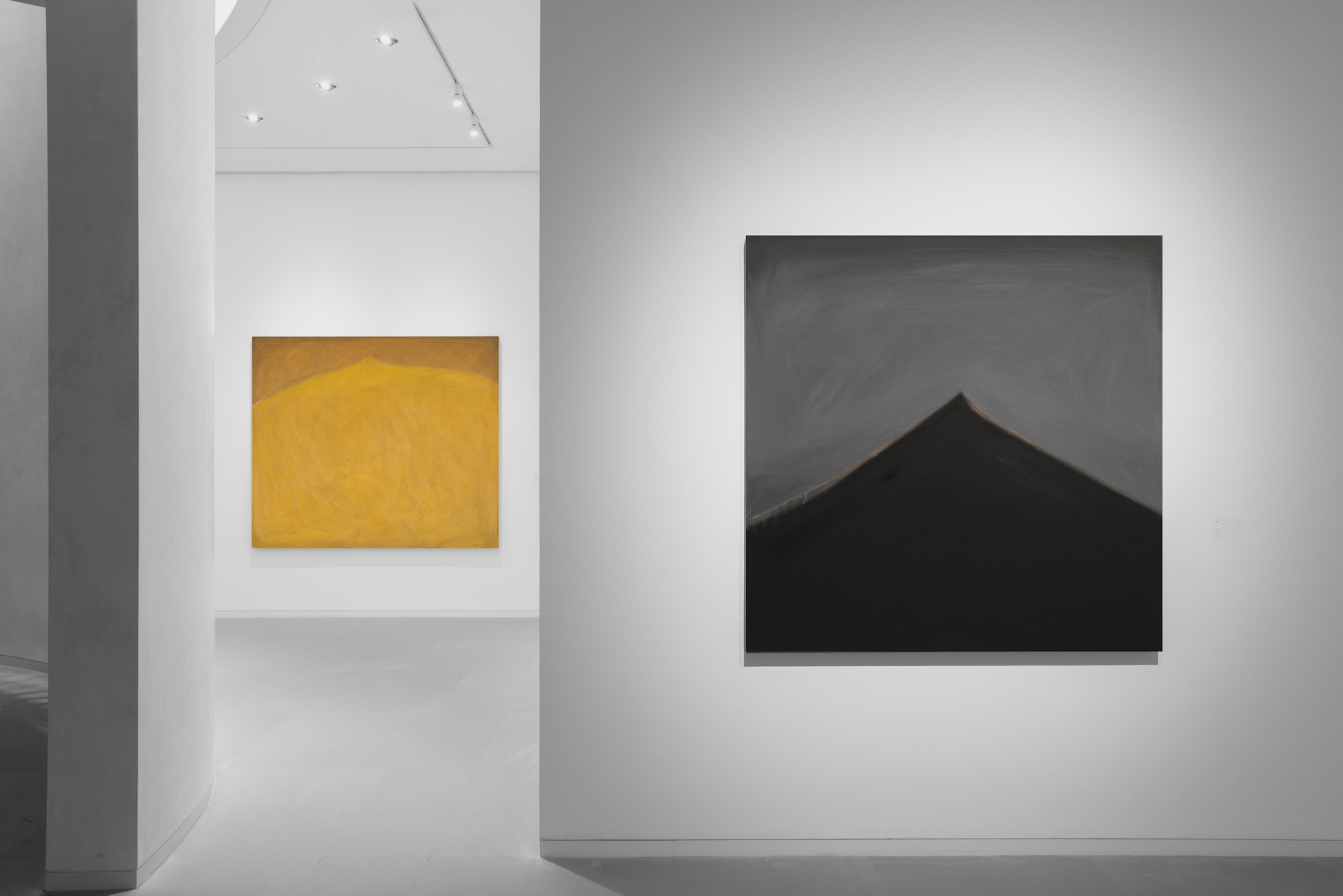
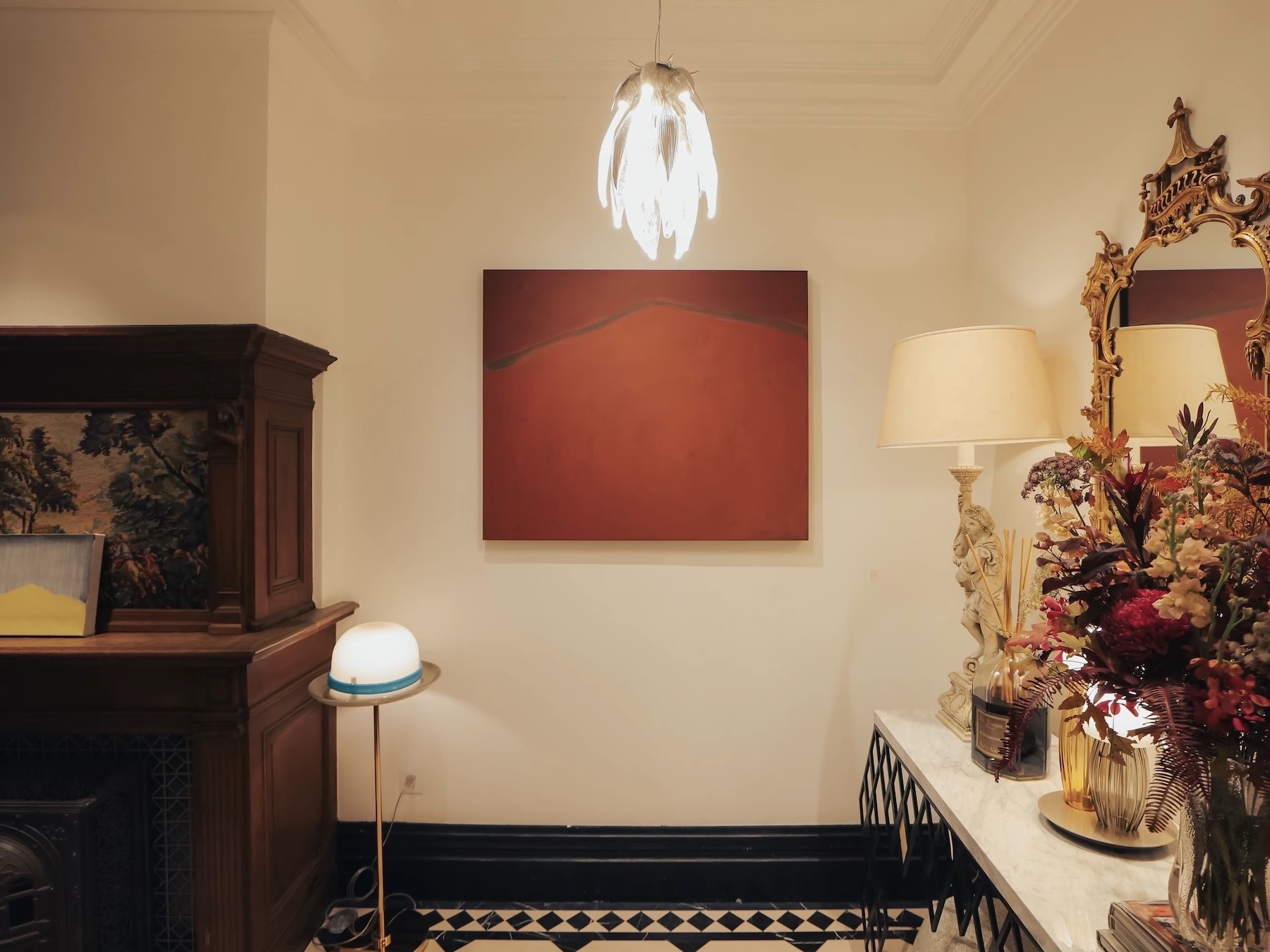
High Mountain, 2017, Oil on Canvas, 230 x 210cm. Courtesy of the artist, Aurora Museum and Moodsea Gallery
A scholar and curator long committed to the critical study of contemporary Chinese art, Dr. Hill brings to this project her characteristic dual perspective, positioning Wang Yizhou’s practice in dialogue with the classical lineage of Gu Kaizhi and Liang Kai on one hand, and the modernist trajectories of Sanyu and Barnett Newman on the other, situating the artist within a broader art-historical frame.
Three Decades of a Single Line
The Quiet Sublime resists the conventional register of the retrospective. The seventy-odd works on view span more than three decades, shifting in medium from ink on xuan paper to oil on canvas, from video to installation, and in subject from lotus ponds to mountain ranges. Yet visitors are quickly made aware that the temporal distance between these works is, in a sense, illusory: they share a single, defining gesture, the drawing of a line to articulate a relationship.
That line has a precise origin. A drawing of a calligraphy practice slate documents the young artist’s habit of using water in place of ink, tracing characters across stone. The marks vanished; the act of making them did not. This is the true entry point into everything that follows: a line that emerged from bodily memory, transformed over decades, and ultimately became the structural core of his entire body of work.
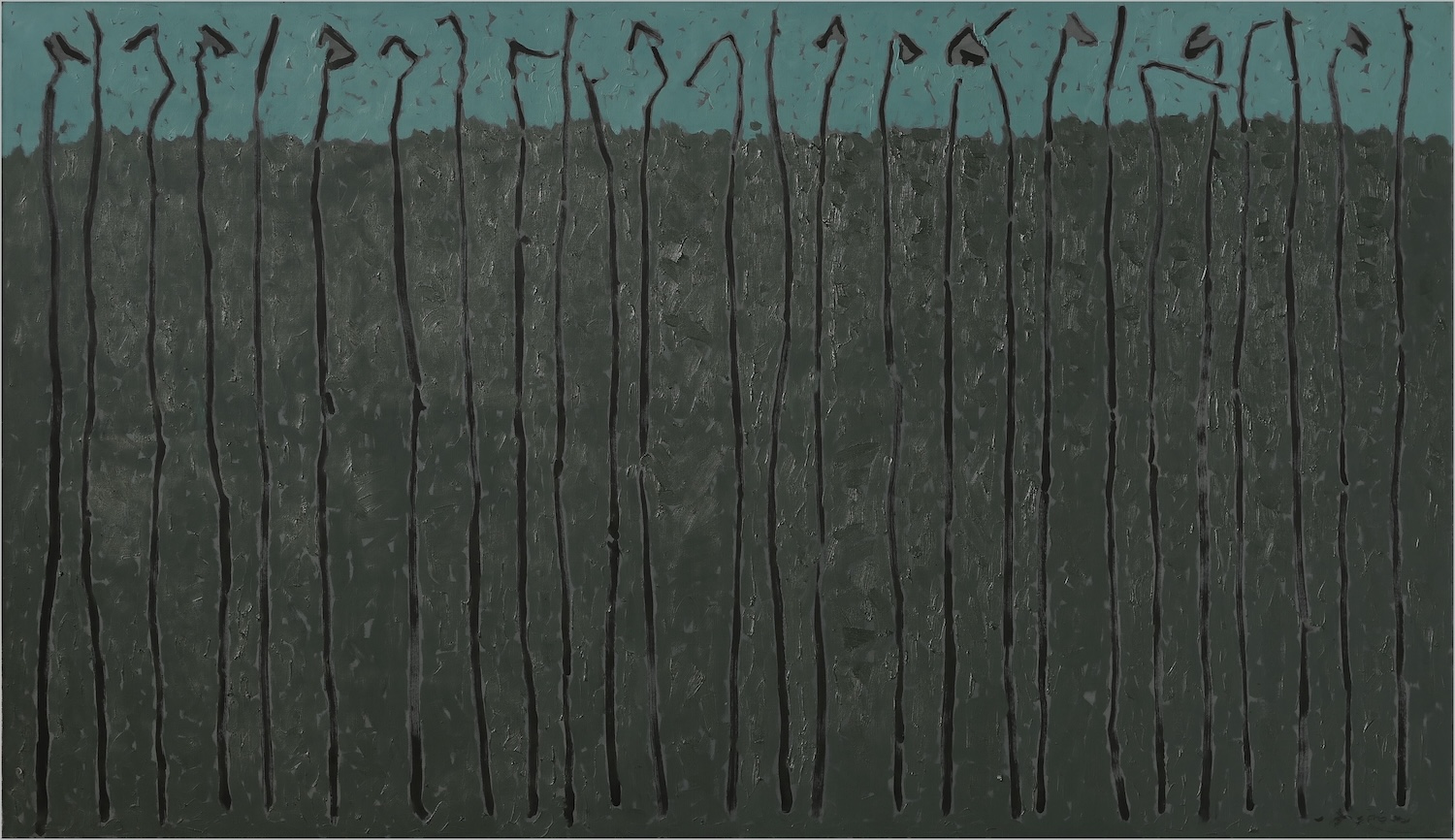
The Lotus series marks the moment this line first asserted itself. Wang abandoned leaves and blossoms, retaining only the stem — a single vertical element, isolated at the centre of the composition, thrust into an expanse of empty ground. Force is held within the stem’s curve; space is constructed through what surrounds it. The decision not to paint becomes, through the line alone, an act of total compositional command achieved with minimum means.
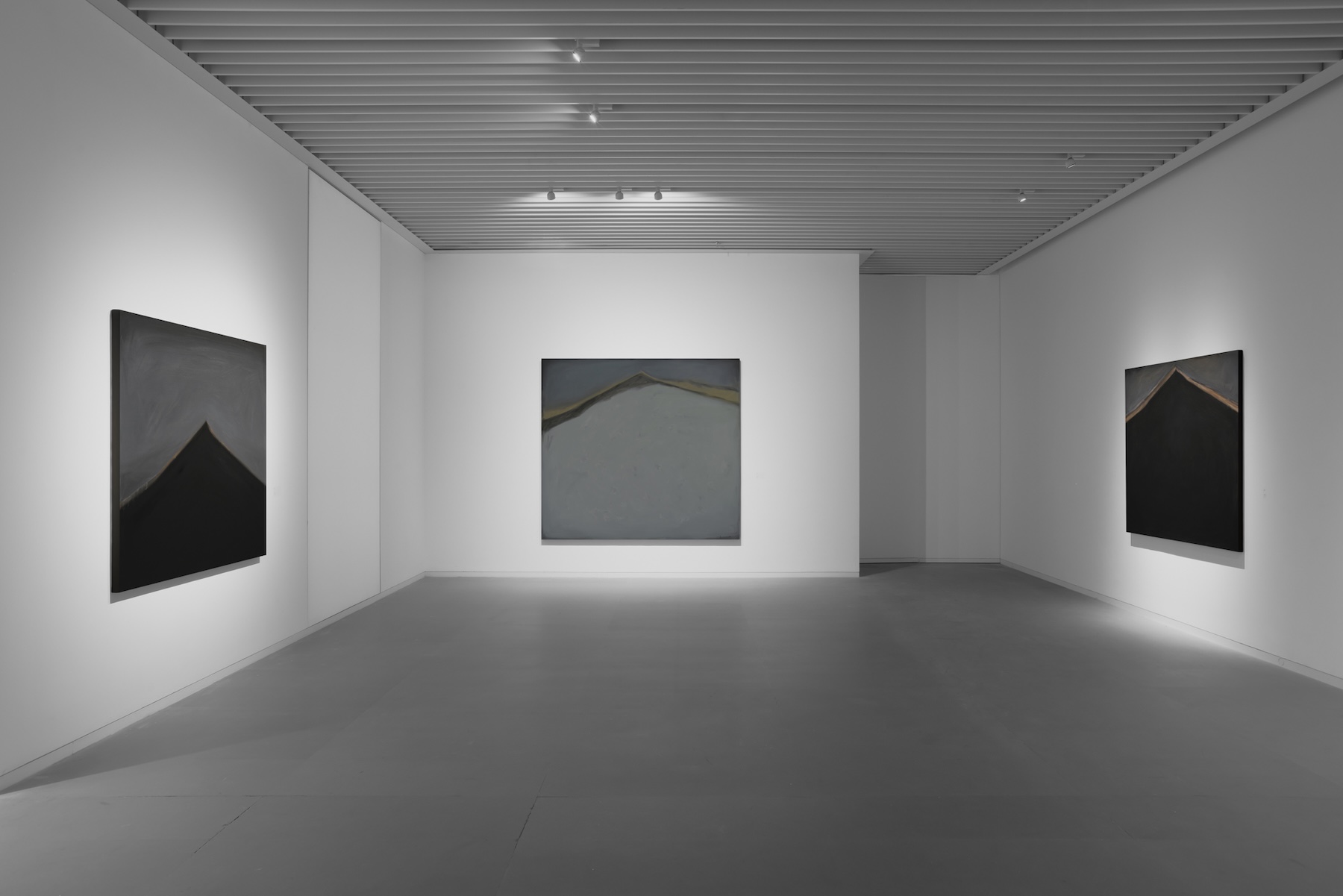
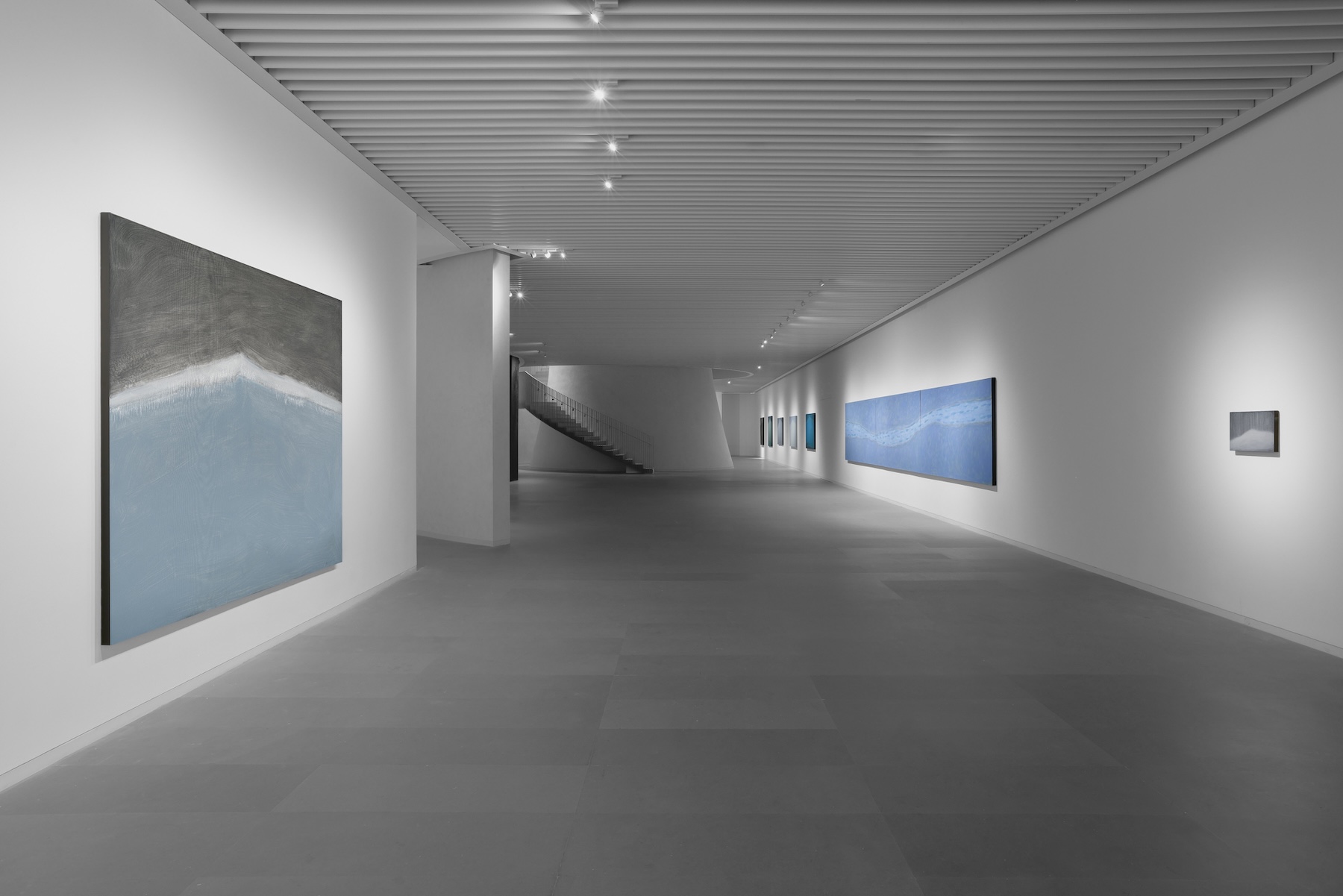
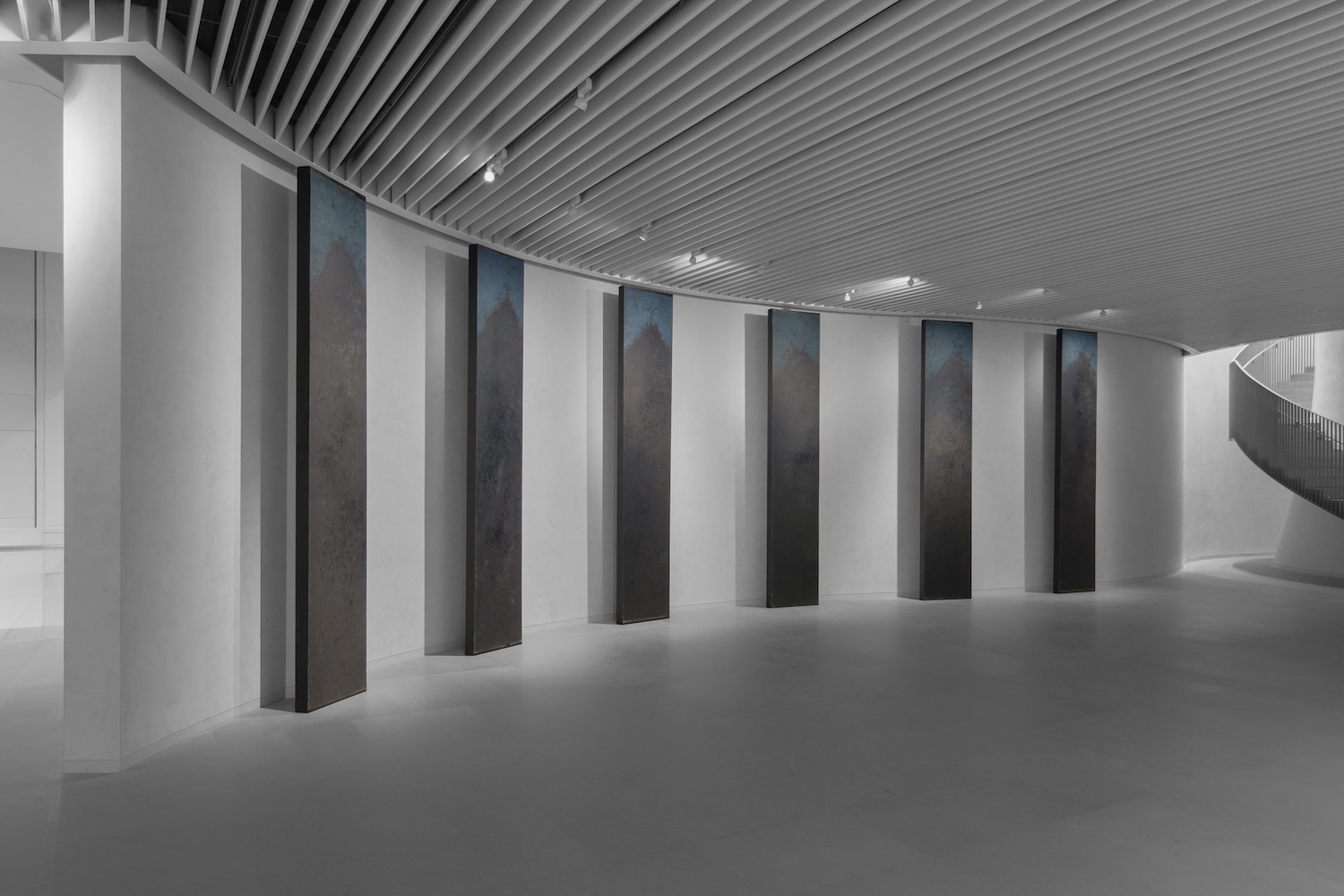
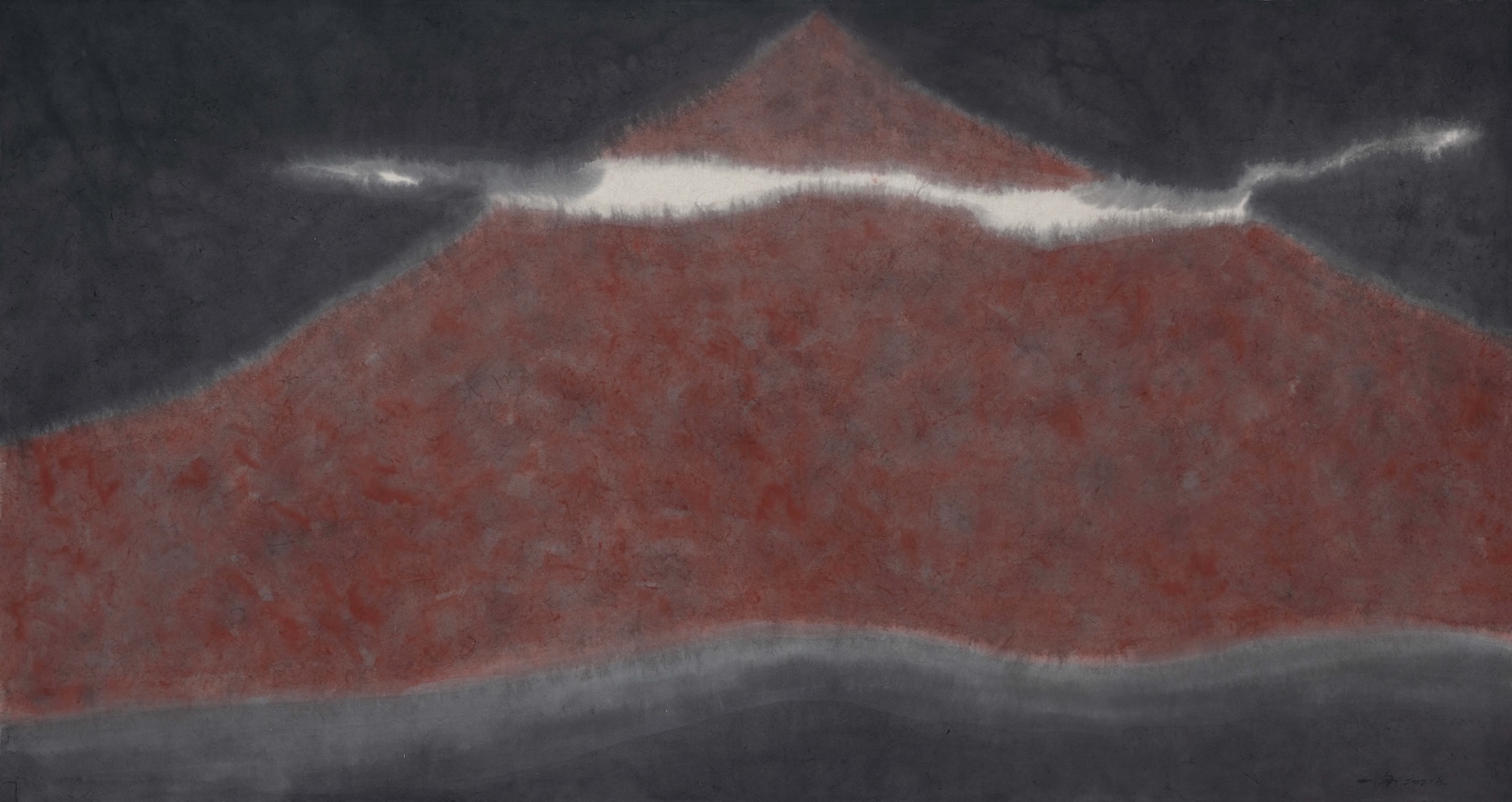
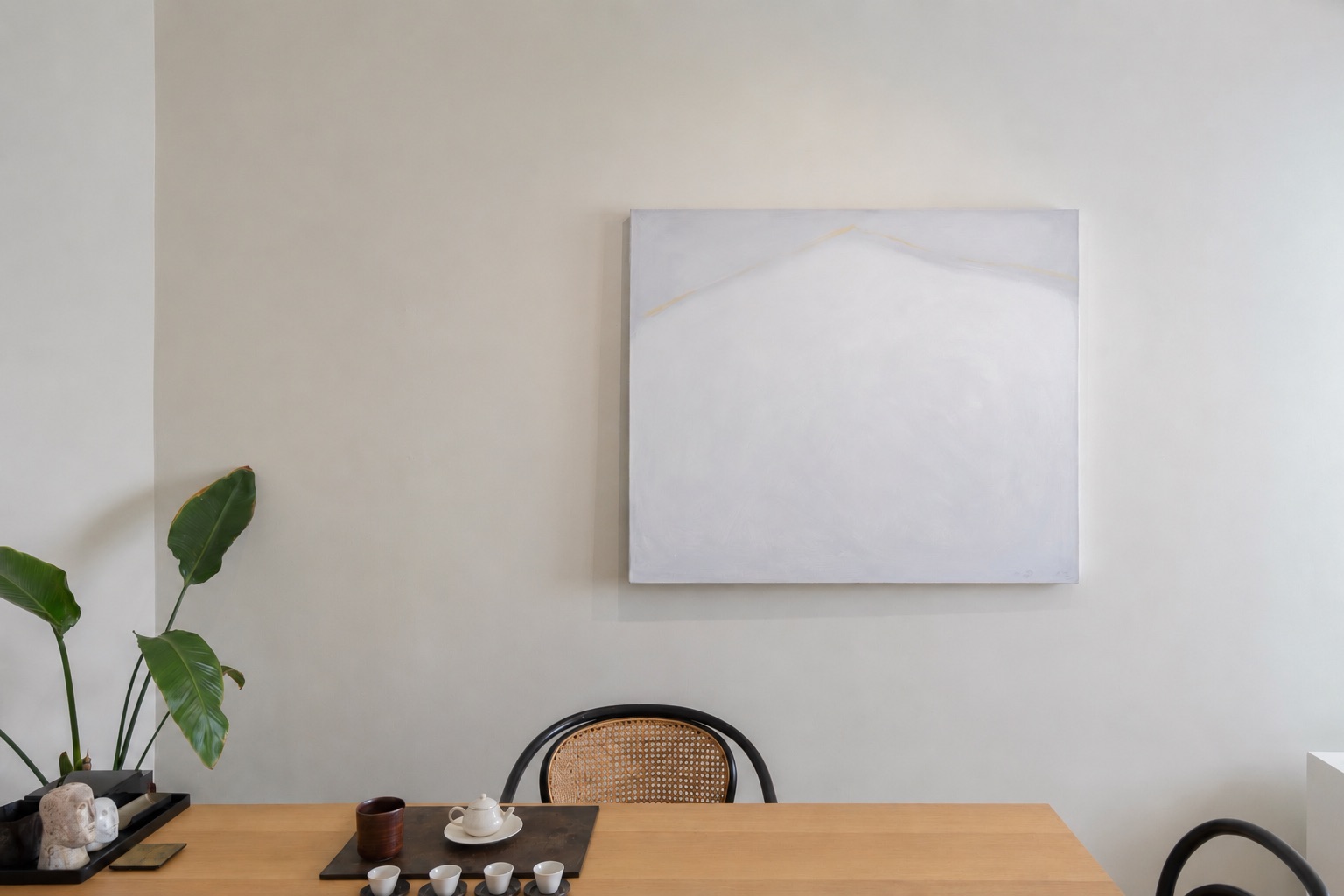
In the High Mountains series, the line pivots from vertical to horizontal, from lotus stem to the continuous ridge of a mountain range cutting across the picture plane. Here, line and form are wholly fused: the mark simultaneously defines the mountain’s contour and anchors the entire composition, becoming its most commanding presence. One notices that the line is not uniformly smooth — it carries the variable pressure and inherent elasticity of calligraphic brushwork, lending the mountain mass a quality of “xieyi” expressiveness beneath its considerable physical weight. It is precisely this tension between line and volume, between figuration and mark, that keeps the Mountains series suspended between abstraction and landscape, belonging fully to neither.
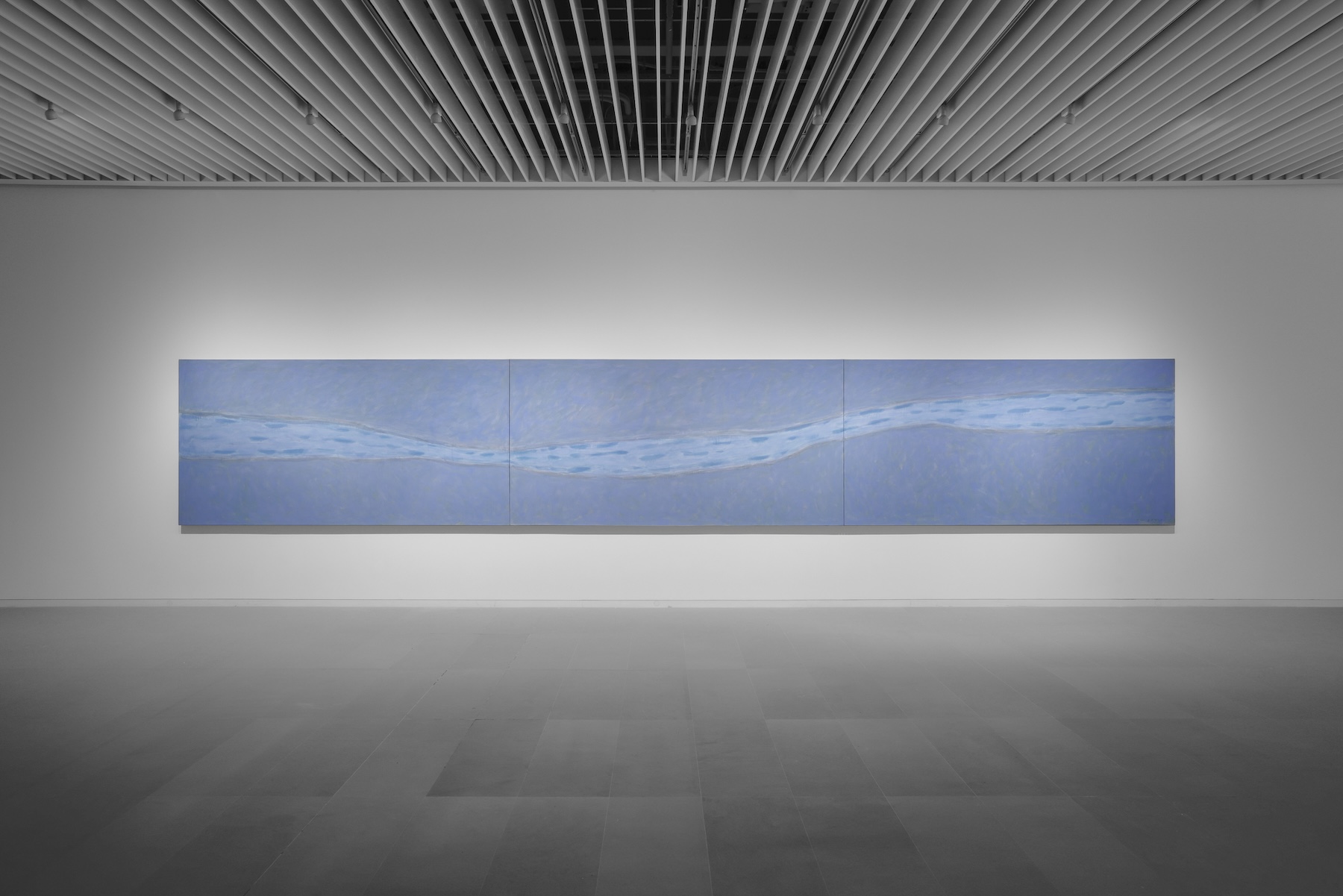
In the Rivers series, the line flattens entirely into horizontal bands of ink. Azurite, malachite, and pale yellow seep through xuan paper, the mineral pigments entering into a subtle negotiation with the fibres of the sheet, producing a surface of near-absolute stillness. Yet that stillness has density. Beneath the placid surface, a powerful undercurrent is compressed into the thin, repeatedly layered ink. The more tranquil the surface, the more palpable the movement beneath, a structure of restrained force, of stillness as active containment, that constitutes the central visual logic of the series.
The Direction of Reduction Defines the Nature of Distillation
To understand Wang Yizhou’s practice, one must first resolve a fundamental conceptual question. Wang has consistently described his methodology through the term “jianyue” — loosely rendered as “simplicity” or “distillation” — a word that, in the visual arts context, risks easy conflation with Western Minimalism. The internal logics of the two, however, run in opposite directions.
Minimalism pursues emptying, the exclusion of meaning, narrative, and affect in favour of pure material presence. Wang’s “jianyue” is closer to distillation: what is removed is excess; what remains is essence. Where Minimalism arrives at form itself as terminus, Wang’s practice arrives at the concentration of “shen,” spirit, or animating force.
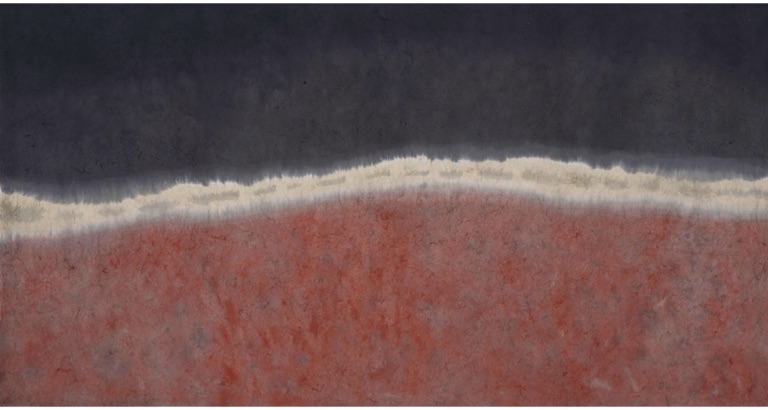
The ink-on-paper Rivers works offer perhaps the most immediate point of entry into this distinction. Like the oil-on-canvas Mountains series, they are built through repeated layering — but the absorption of pigment by xuan paper makes the process of distillation newly legible. Each application is near-transparent; the colour does not coat the surface but penetrates it, the azurite, malachite, and pale yellow diffusing and settling between fibres until the final hue seems to emanate from within the paper itself rather than resting upon it. This luminosity from within gives the ink works their characteristic lightness and gentleness, while the works themselves share, at the level of material logic, the same cumulative discipline as the oil paintings. In both, the line remains the true core; the medium is simply the condition under which it becomes visible.
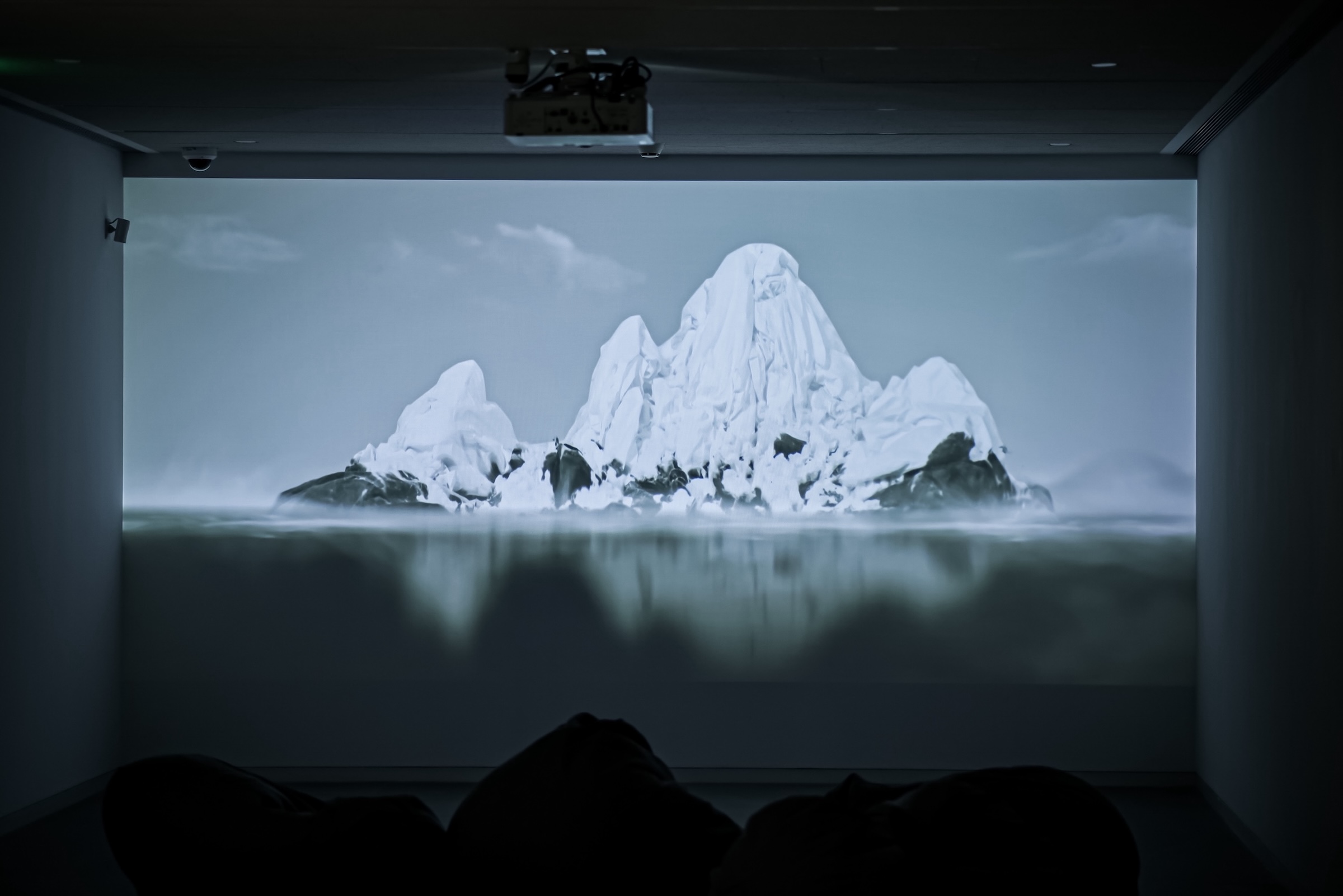
Wang Yizhou’s early video work occupies a singular position within the exhibition. A mountain form fashioned from xuan paper is slowly submerged in ink, turning from white to black — an irreversible transformation: matter altered by external force, its form unchanged, its nature transformed. The work was originally conceived as an installation in which the mountain would be white at opening and black at closing, two ceremonies, one complete work, a vision that remained unrealised because the necessary conditions were not in place, and was ultimately preserved as a video. Its logic of jianyue differs fundamentally from the reduction practised elsewhere in Wang’s oeuvre. There is no interrogation of what the transformation means, no judgement of its outcome. All such considerations are stripped away, leaving only the change itself: from white to black, from presence into void, from void back into form. Transformation is the work’s sole and complete subject.
A newly commissioned installation extends this inquiry into three dimensions. A geometric mountain form constructed from metal wire floats above a mirrored cylindrical plinth; red mesh fills the volume of the mountain’s body while light from beneath projects the contour line across the surrounding floor. The mountain’s form is retained, but reduced to its most elemental skeleton — an armature of line and enclosed space. Translated through new materials, the single mark that once divided sky from earth on canvas becomes a structure to be physically circumnavigated; the mountain becomes not an object of contemplation but a relational field one can enter.
The Quiet Sublime is the result of more than three decades of sustained inquiry: how to distill, until only the essential remains. What emerges is the work of a thinker of rigorous methodological self-awareness, one whose questions have grown steadily more exacting and who has carried a single line through it all, without ever allowing it to rest in the same place twice.
Conversation wtih Wang Yizhou, Artist
How do you understand your own philosophy of “jianyue” — of distillation?
I was steeped in classical Chinese culture from an early age. Reading classical texts as a child gave me direct access to humanistic thought, and from there I was naturally drawn into the study of ancient Chinese philosophy.
Why distillation? Because ancient philosophy insists upon it. In Chinese thought, removal is not loss — it is refinement. It is the act of gathering what is better and absorbing it. To strip away is to take in.
And what does reduction ultimately arrive at? It is more like a process of self-cultivation. There was a time when I very much wanted to communicate ideas that others could understand. Now I no longer have “ideas” in that sense. What I have instead is accumulation and cultivation. That is the thought.
This exhibition presents oil painting and ink work side by side. How do you understand the relationship between the two as distinct creative languages?
I have always worked in both simultaneously. There was ink work alongside the Lotus series, and alongside the Fish series. It is simply that oil painting was shown first, and first impressions tend to hold.
The two feel entirely different. Oil painting foregrounds the movement of the brush and the density of colour — it has a visual weightiness. Ink becomes something looser. No matter how intense the colour, on xuan paper it becomes yielding, compliant. The interaction between the paper texture and the pigment generates countless subtle variations — that is what I have always been exploring.
The method for painting mountains in ink was something I discovered while painting fish — layer upon layer of very dilute ink, slowly built up, twenty or thirty applications before it is complete. Each layer is almost invisible on its own, but by the end a kind of density emerges from within. The process itself is a form of meditation. The same intention, carried through two different materials, arrives at two entirely different sensations. That subtle divergence is precisely what I am after.
This exhibition includes an early video work. What was the original conception behind it, and how does it relate to the broader arc of your practice?
The original idea was to present a transformation in three dimensions — a mountain made of xuan paper, submerged in ink, slowly turning from white to black. What I wanted to ask was this: once it has gone from white to black, is it still the same material? That question is itself a philosophical one.
The original conception was an installation: a white mountain at the opening, a black mountain at the closing — two ceremonies forming one complete work. The conditions to realise it did not exist at the time, and so it became a video instead. That unrealised version has stayed with me. If the opportunity arises, I want to return to the original idea with dry ice, mirrored water and complete that passage from white to black in real space.
Conversation with Dr. Katie Hill, Curator, Founder of OCCA, Academic Lead of Asia Sotheby’s Institute of Art, London
How has OCCA worked to connect major Western institutions with Chinese artists and foster genuine cross-cultural dialogue?
When we were in Beijing in 2007 and 2008, there was an enormous amount happening: exhibitions, production, activity of every kind. But from an international perspective, the critical writing and rigorous analysis were simply not keeping pace. Western understanding of contemporary Chinese art had been flattened into a very specific set of categories — Cynical Realism, Political Pop — because those were legible, and the market received them well. We knew that what was actually occurring was far more complex.
What matters most, in the end, is not the exhibition itself but the quality of the critical dialogue it generates. You have to be able to articulate a work clearly enough that it can be understood across different cultural contexts. Language is everything. If you cannot say what something is, it doesn’t exist.
Since 2020 the fluidity of international exchange has contracted considerably. But that is precisely why a project like The Quiet Sublime matters more now. The answer is here, in this space; the kind of sustained, substantive conversation that can take place between people present in the same room is something the internet cannot replicate.
How do you understand the significance of this exhibition in tracing Wang Yizhou’s creative development?
The most important value of The Quiet Sublime is its sense of time. It gathers nearly four decades of Wang Yizhou’s practice into a single space, allowing you to trace within a single room how that thread has extended, step by step, to the present.
Where does the line begin? With the young Wang Yizhou using water on a stone slab to practise characters. The marks vanished; the action of driving a stroke into space did not. From calligraphy to painting, from ink to oil, the line has persisted; only the qualities of the medium have changed.
That line passes through the stems of the Lotus series, along the mountain ridge, across the surface of the river. It can be traced to the assured, definitive ink lines of Gu Kaizhi’s Admonitions Scroll in the Eastern Jin dynasty, and through Liang Kai’s Southern Song tradition of conjuring deep spatial resonance from a minimum of marks until it arrives, transformed, in Wang Yizhou’s own terms. Language has moved from writing to pure vision; the bodily memory has never left.
What he is doing is not the depiction of form but the delineation of a relationship — the boundary between heaven and earth, the position of the human within the natural. What is rare about this exhibition is that the arc of that transformation can be followed and read. Where you begin looking determines where understanding lands.
How does the exhibition title “The Quiet Sublime” speak to both Eastern artistic sensibility and Western modernist aesthetics? And how would you locate Wang Yizhou’s concept of jianyue within an international context?
In the West, the sublime carries very specific connotations — the Romantic poets, German landscape painting, a sense of awe before the immensity of nature. But jingmi — quietude — belongs to a different dimension in Chinese culture: Taoism, Chan Buddhism, the inward-turned, meditative stillness. Placed together, the two terms point simultaneously towards Eastern interiority and Western grandeur, and the tension between them is genuine, not contrived.
As for jianyue — I resist the reflex to translate it as Minimalism, because Western Minimalism is about emptying: the exclusion of meaning, the move towards pure form. What Wang Yizhou practises is closer to distillation. When you sharpen a pencil, you remove the outer material to arrive at the core. Both processes involve reduction, but they move in opposite directions.
Wang’s jianyue is rooted in the philosophical traditions of the Tao Te Ching and the I Ching — where there is no absolute stillness, only continuous movement and refinement. This is precisely why his work, caught between figuration and line, between form and volume, never resolves into pure abstraction. The line is always in motion — and always pointing in the same direction.
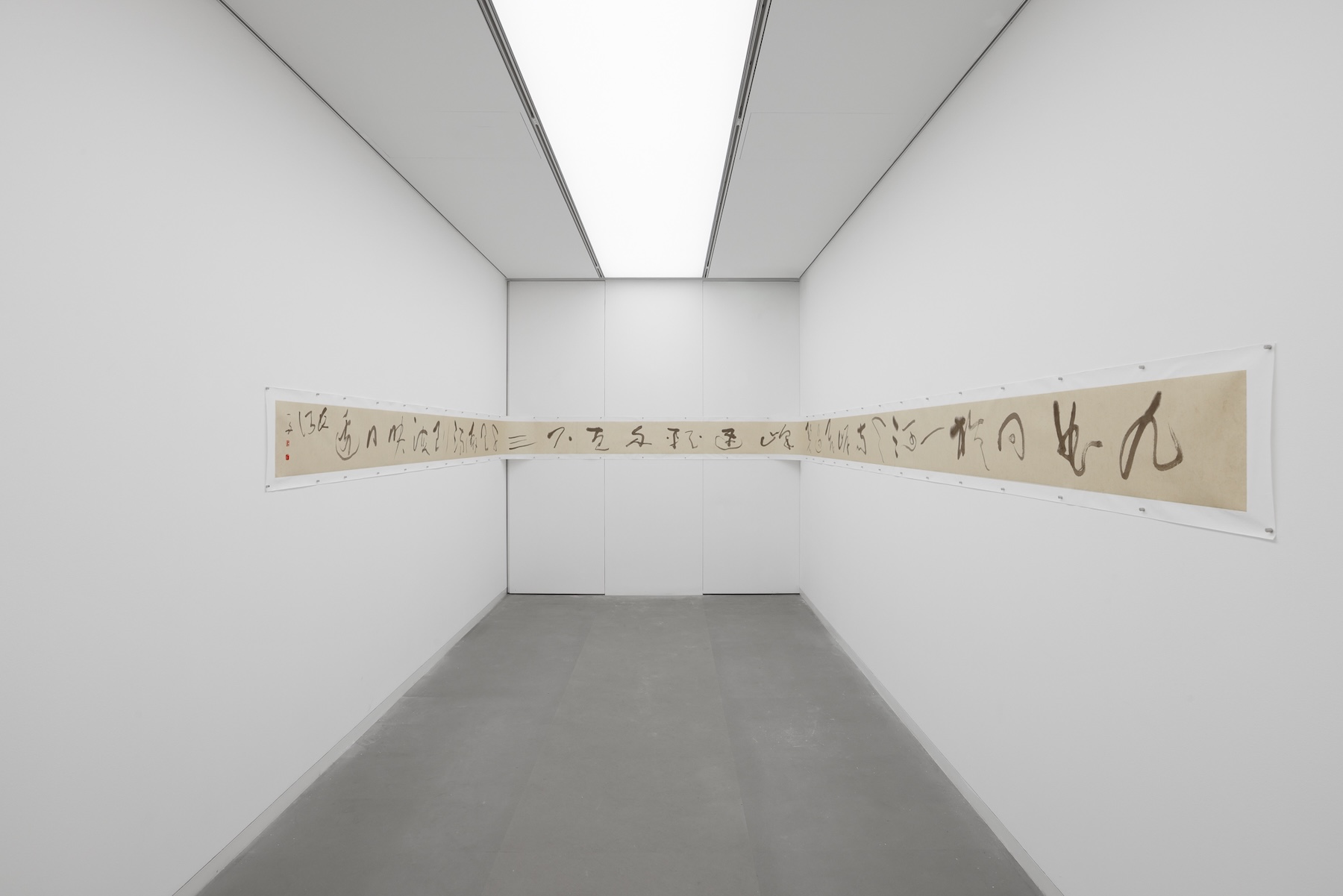
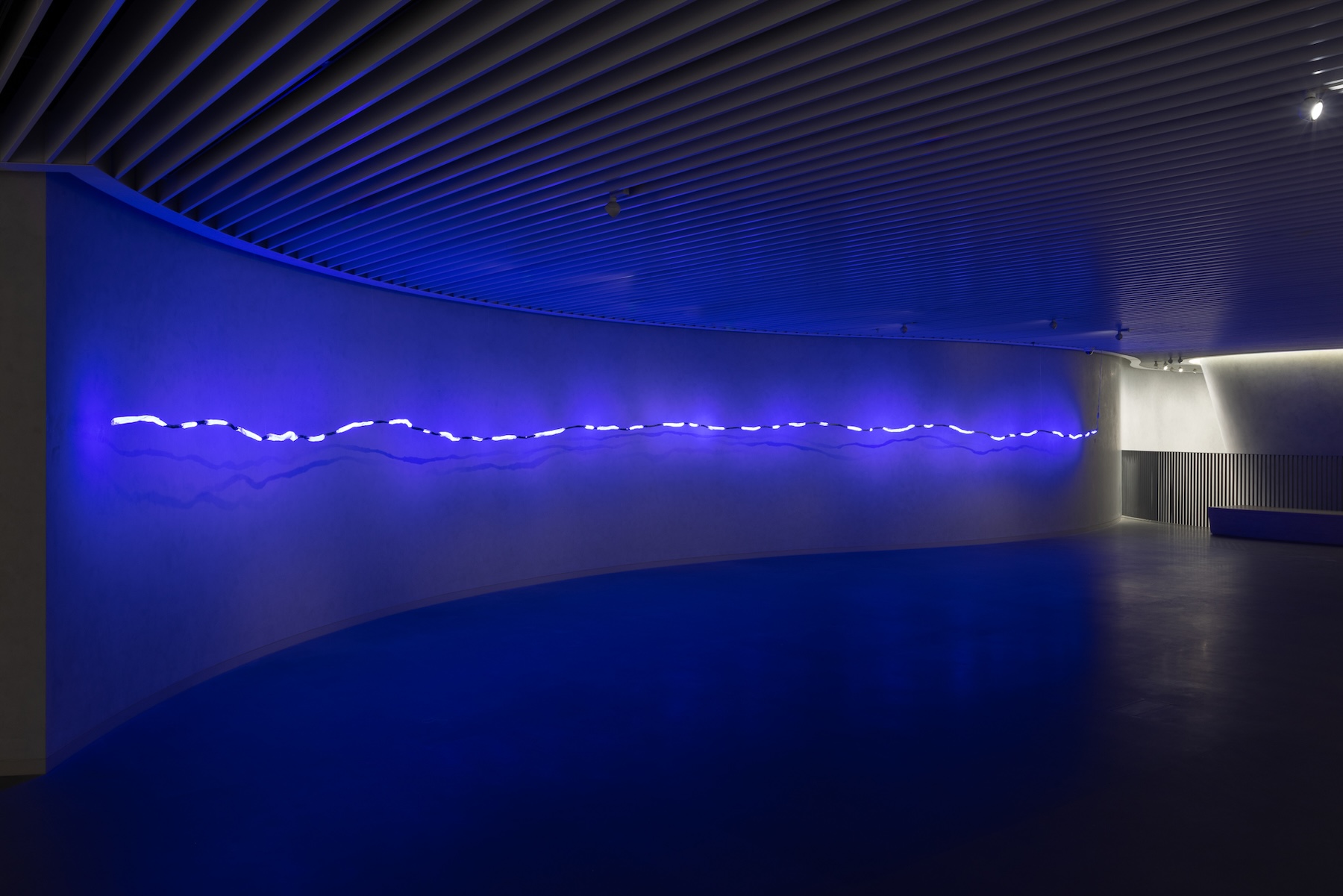
Endless River, 2026, Calligraphy, Variable Dimensions, “The Quiet Sublime” by Wang Yizhou, Aurora Museum, Shanghai, 2026. Courtesy of the artist, Aurora Museum and Moodsea Gallery
Conversation with Lian Shaw, Artistic Director of LUMINOR London, Founder of Moodsea Gallery
What is LUMINOR’s mission as an institution in London, and how does it approach the international promotion of contemporary Chinese art?
Founded in London in 2025, LUMINOR is an art institution dedicated to modern and contemporary art collecting, research-based exhibitions, and academic discourse. Its mission is to advance artistic practices of art-historical significance and foster East-West artistic exchange and collaboration through multi-dimensional curatorial frameworks.
Establishing LUMINOR in London was a deliberate response to a critical gap: while China ranks among the world’s top three art markets, Chinese galleries and artists remain drastically underrepresented at leading international platforms including Frieze, Art Basel, and the Venice Biennale. Collaborating with local galleries and museums, we aim to build an international bridge to bring exceptional Chinese contemporary art to global audiences. Too often, international institutions and collectors encounter a narrow selection of Chinese contemporary art that fails to reflect its true caliber and depth. Stereotypes about Chinese art persist precisely because the West has not been exposed to the full breadth and excellence of its artistic output.
Why did LUMINOR choose to work with Wang Yizhou, and what criteria guide your selection of artists?
Our selection of artists is guided by two core principles: rootedness in Chinese cultural heritage, paired with a universally accessible, international visual language.
Wang Yizhou’s practice embodies this duality. His work is infused with classical Chinese philosophy, with the I Ching (Book of Changes) serving as the conceptual foundation of his creation. His signature linear element embodies the interplay between certainty and uncertainty, as well as subtle nuances between color and brushwork. Viewers of any cultural background can perceive the elegance of Chinese literati aesthetics alongside the ethos of Western modernism in his work.
Western contemporary art tends to prioritize narrativity, with explicit conceptual and formal expression. In contrast, Wang’s profoundly metaphysical practice presents an aesthetic threshold for cross-cultural audiences—yet this metaphysical depth represents the most sophisticated core of Chinese contemporary art. What it requires is a platform to elevate it onto the international stage, and this is precisely the mission LUMINOR undertakes and fulfills.
Text by Steven Wang
