


The Viennese collector couple Kathrin Weber and Axel Anderl have been building their art collection, AnderlWeber, since 2009. Focused on ultra-contemporary Austrian art, the collection gravitates toward abstract painting and works rich in material texture. What sets them apart is the ecosystem they have built around it, comprising two converted lofts in Vienna, an ArtSpace for curated invitation-only exhibitions as a modern reinvention of the Viennese salon and a CollectorsSpace for the collection itself. There, artists, collectors, and cultural figures converge in an atmosphere of exchange, with Kathrin and Axel deliberately refraining from charging rental fees or commissions to preserve the integrity of the space.
In conversation with LARRY’S LIST, Kathrin and Axel discuss why personal chemistry with an artist matters as much as the work itself, how they built a space rooted in connection rather than commerce, why they have never sold a single piece from their collection, as well as the artist residency program they are planning to develop.
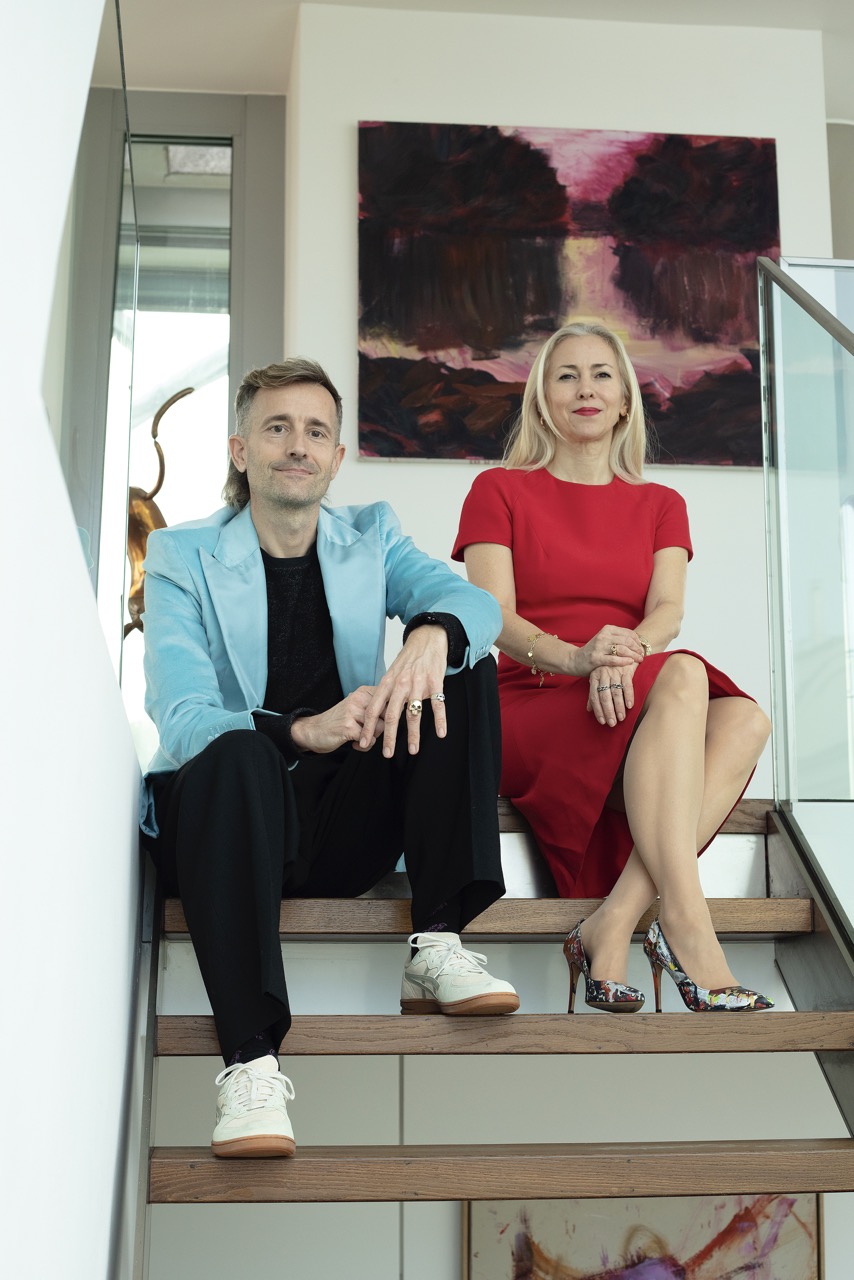
What made you want to start collecting art? What is the main motivation behind your collecting?
We went two different paths that eventually converged. It should be noted that we have been a couple for 33 years. Kathrin was raised with a strong affinity for art. She took me to museums early on in our relationship. At that point, I had not yet developed a respective passion. That came 20 years ago when I took over as head of the IT/IP team at DORDA. I took over representation of museums, but also of artists, such as Herbert Brandl or Erwin Wurm. The glimpse behind the scenes and the collaboration with outstanding personalities from the art world opened my eyes and sparked my interest. This very quickly led to us becoming collectors and becoming a part of the art world.
When did you fall in love with a piece of art? What was it?
We have a special piece of art in our collection which has a fixed place on the wall in our bedroom we face when waking up. It is a painting by Herbert Brandl, his typical broad brushstroke in pink with neon green spots. We fell in love with it on our first visit at his studio. Since we see peonies in it, Herbert named the work respectively. It was the beginning not only of serious collecting, but also of a wonderful friendship with Herbert.
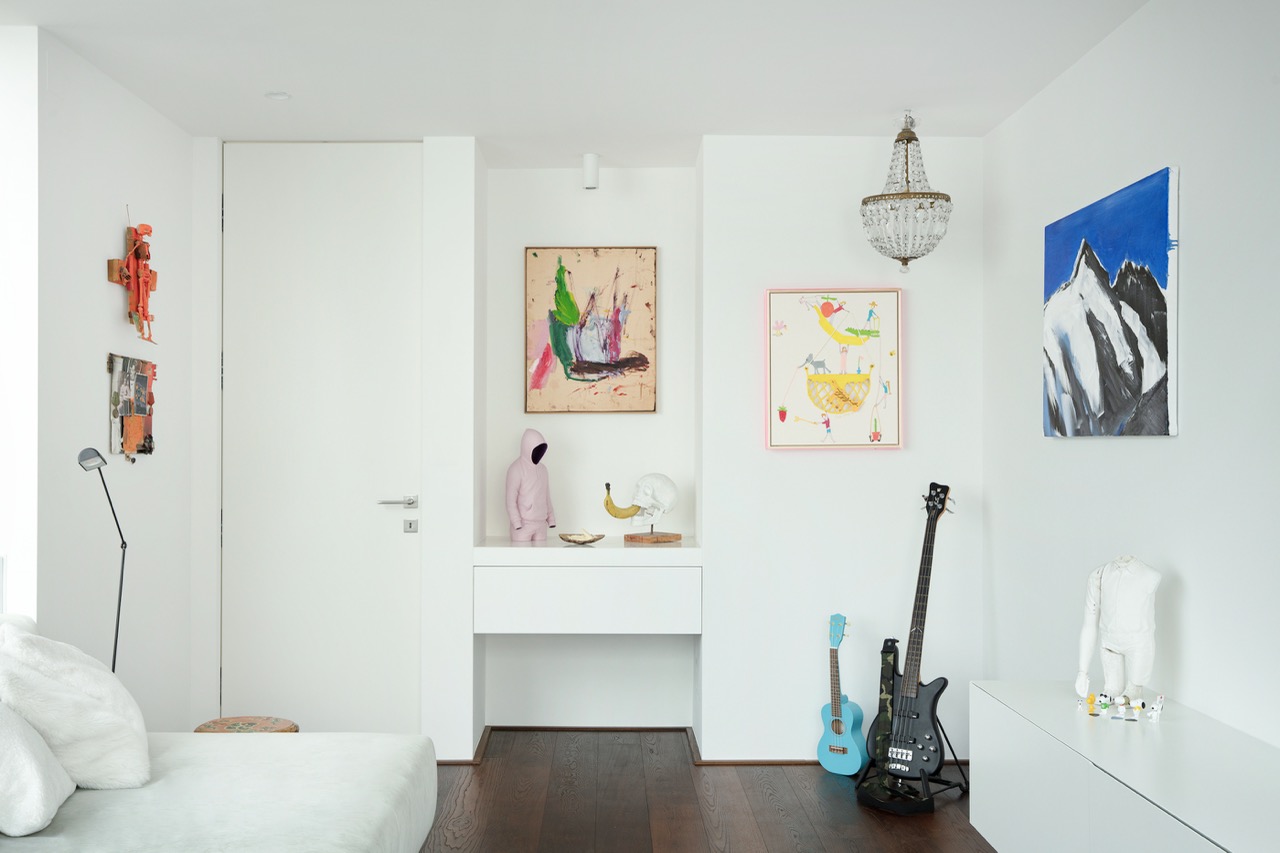
What is your focus regarding the artists in your collection? Are you more interested in emerging or renowned artists?
We have a good split between renowned and emerging contemporary Austrian artists in our collection. Emerging artists are usually more dynamic, and it is easier to get to know them as they are more open at the beginning of their career. We deliberately support young artists, but also artists in their 40s—the most difficult phase in an artist’s career. We are also befriended with almost all young artists we collect. Due to the evenings that we host at our ArtSpace, the artists themselves also connect with and support each other. Often, they recommend other even younger artists to us that perfectly blend into our network. But of course, we also treasure the proximity to renowned artists, such as Martha Jungwirth and the late Herbert Brandl. They have great experience and give us insights into former times when we were not yet collecting and when the art scene in Vienna was still very small. What we specifically like is the connection and network among all the artists we are collecting; this is unique and special.
What type of art that has consistently attracted you? What is the theme, if any, that unites all the works in your collection?
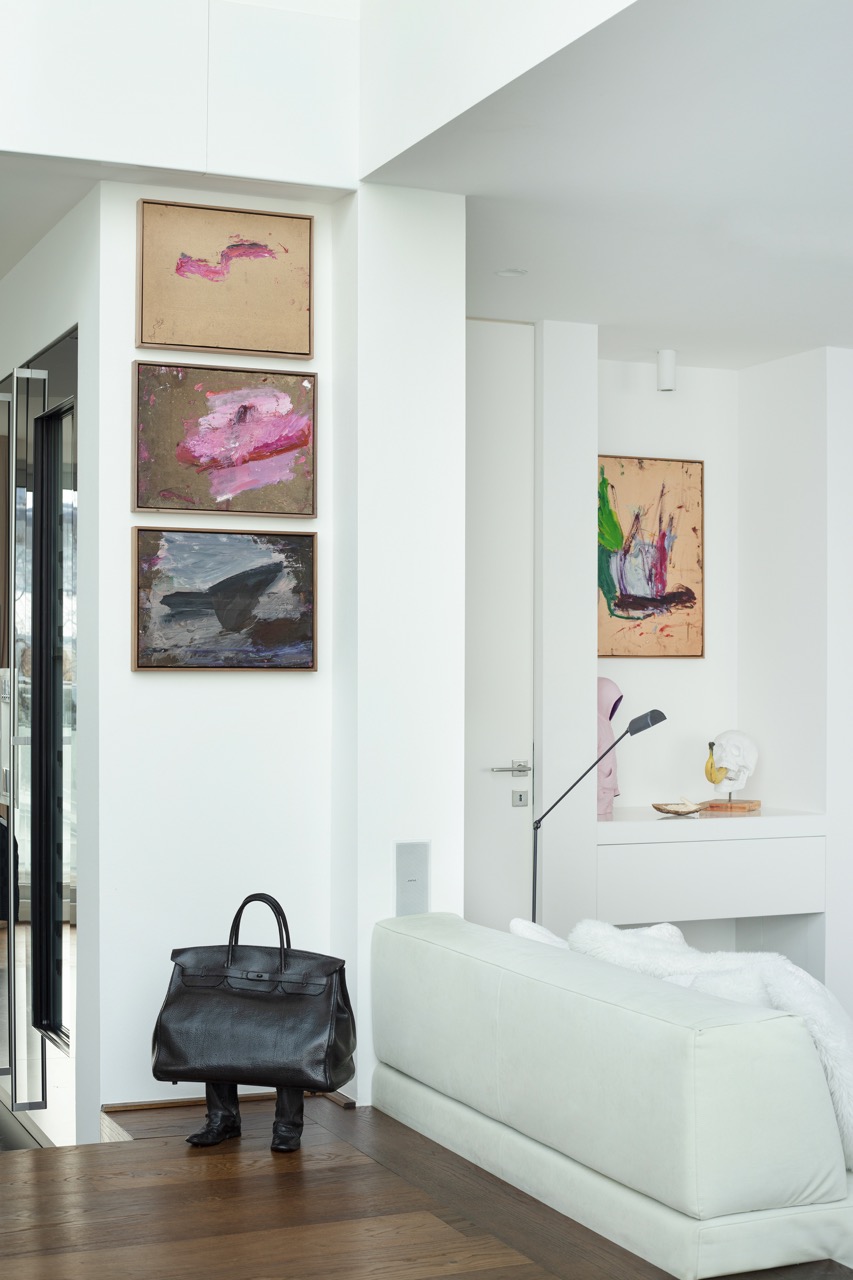
In general, we are attracted more by abstract art and works with thick layers of material, particularly oil. When we are drawn to figurative painting, then it comes from an abstract background. Dénesh Ghyczy, for example, starts his fairly figurative paintings with abstract brushstrokes which stay as disruptions in his finished works.
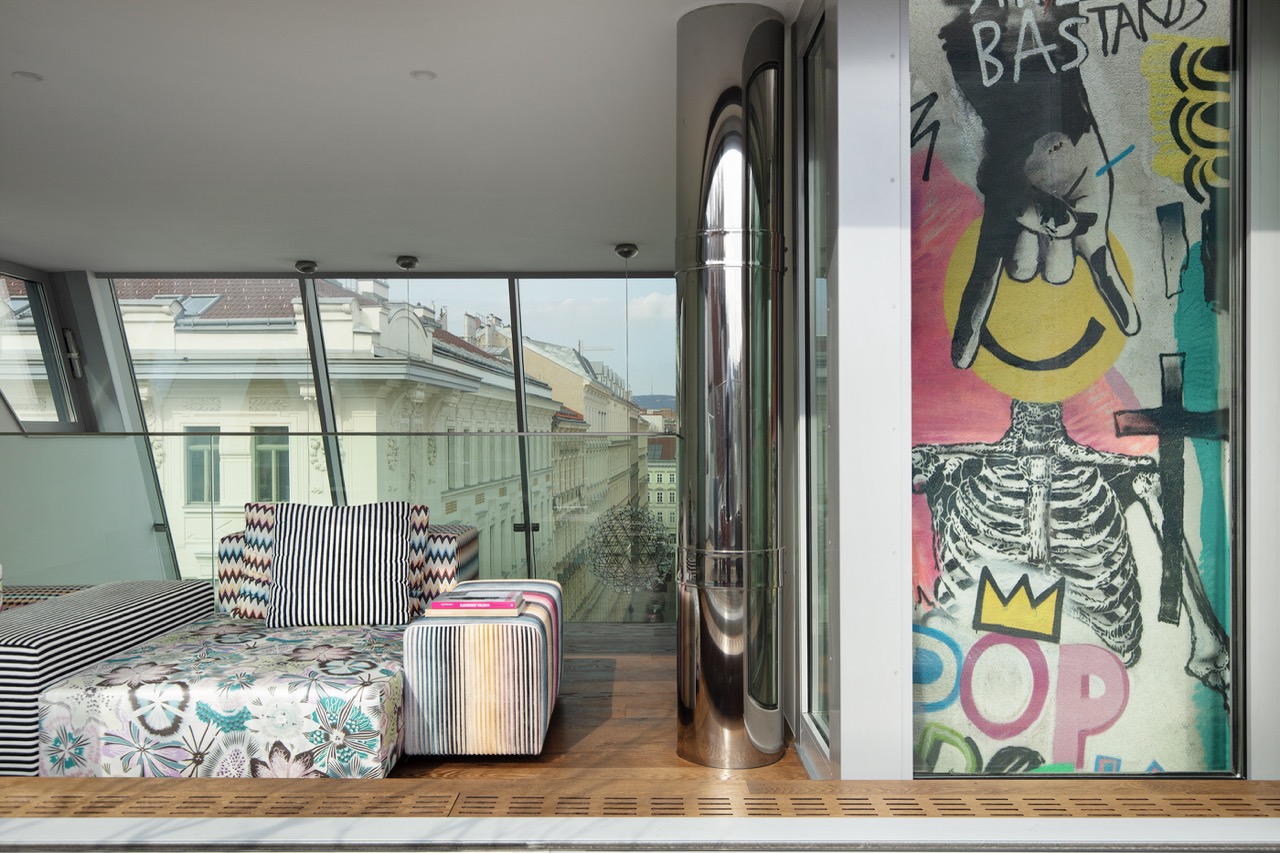
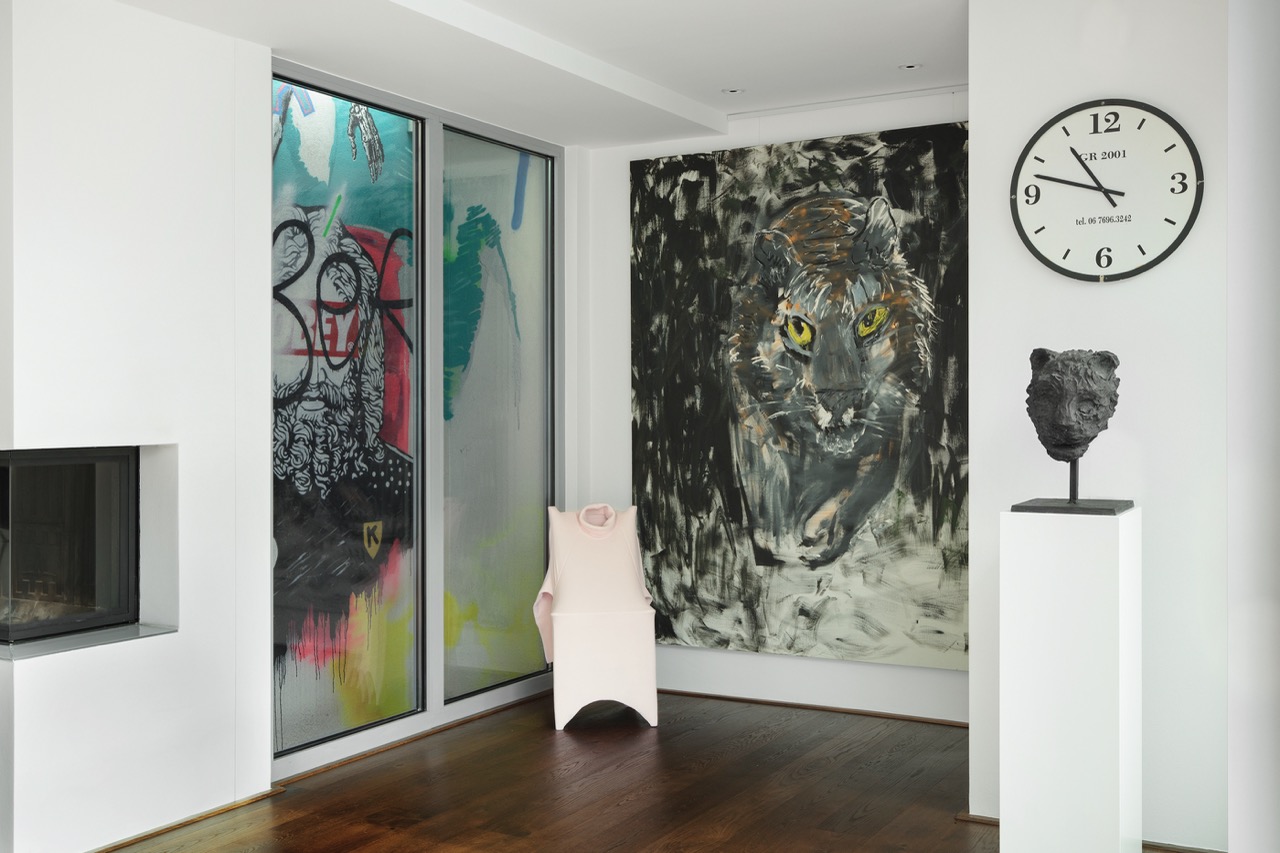
What were the first and the latest artworks you purchased?
The first artwork we bought was “Als ich auf die Erde kam, um für YVES zu werben” (“When I came to Earth to promote YVES”) by the Austrian artist Martin Grandits in October 2009. The latest artwork we bought were two small Martha Jungwirth from the series “Hier die ersehnten Maße meines Juwels” (“Here are the long-awaited dimensions of my jewel”). We brought them home from Paris as carry-on luggage while Martha herself was sitting next to us on the plane.
How many artworks do you own? Where do you display your collection?
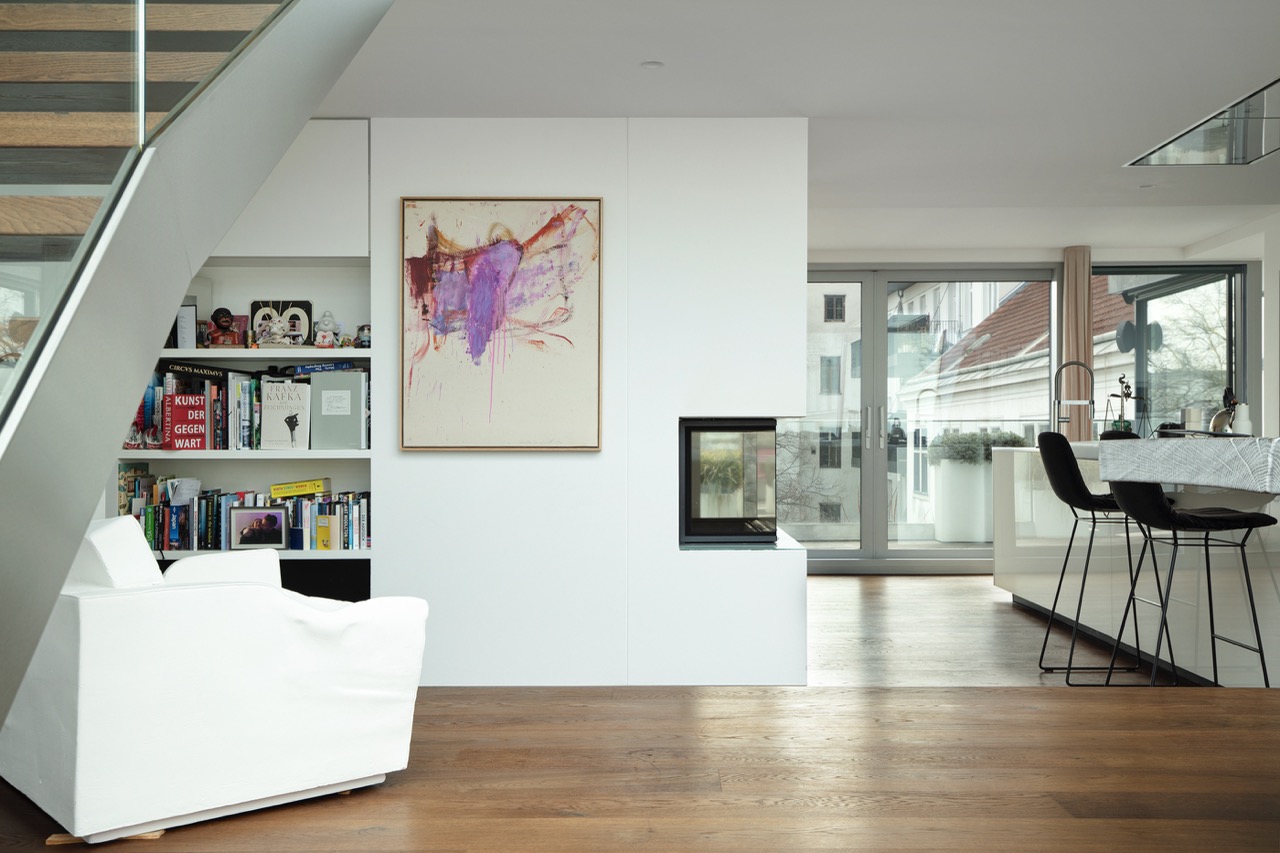
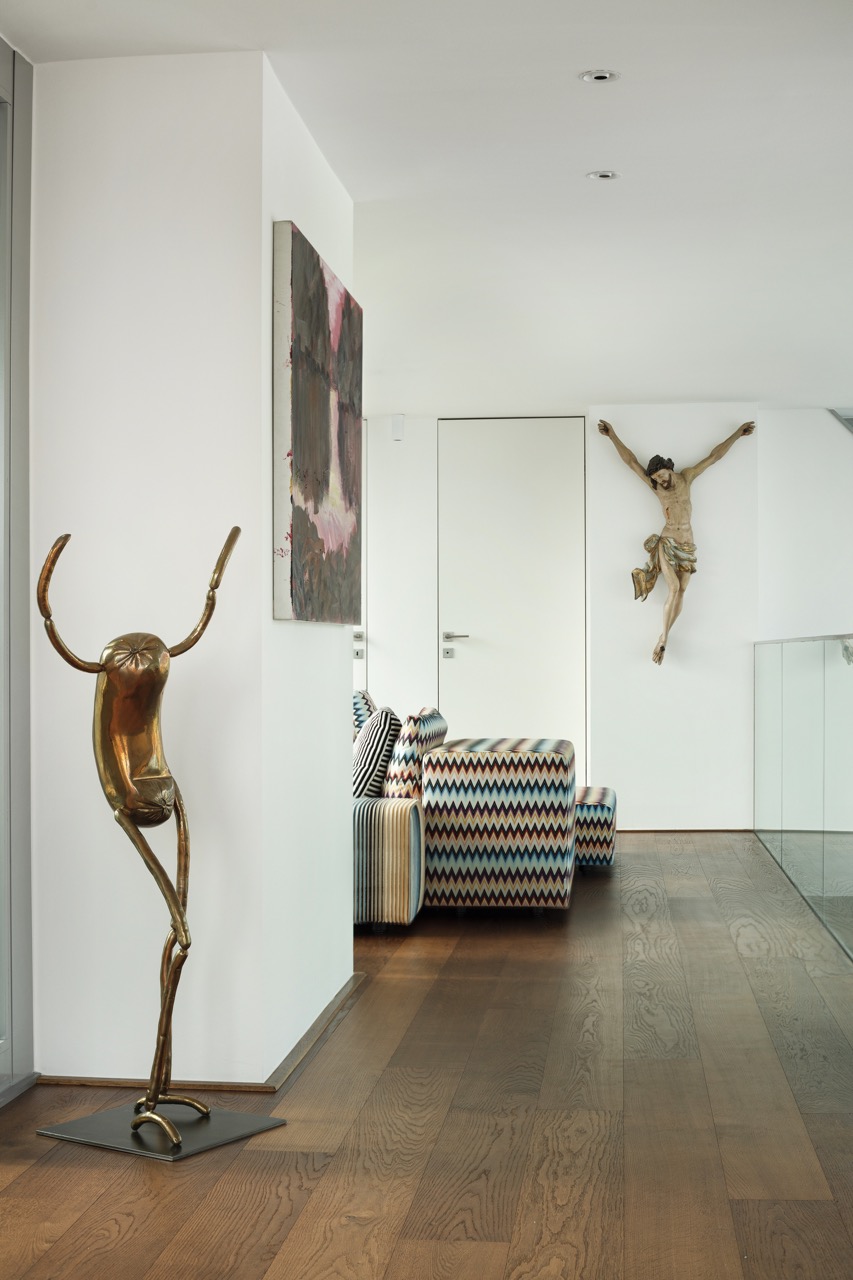
We own about 170 artworks, mainly canvas works, accompanied by sculptures. We do not go into quantity, stay away from multiples, but focus on quality and main works. We started hanging our artworks at home, then expanded to both our offices, taking over every possible wall there. As it is crucial for us that art remains visible no matter who owns it, we had soon to face the point where we had to decide to stop collecting or find a space where our new acquisitions could be displayed. We could not accept stopping collecting. Thus, we looked for a suitable space. We finally found two lofts which are now our ArtSpace and our CollectorsSpace. The part of our collection which exceeds the space at home and in our offices is now displayed in the CollectorsSpace. The ArtSpace is used to host evenings in the sense of the Viennese salons while displaying exhibitions of artists we collect.
Have you ever presented your art collection publicly? How have been your experiences so far?
We have loaned individual works to museums for exhibitions. Besides, we do run the ArtSpace where we have exhibitions of artists we collect. Sometimes this includes pieces from our collection. Besides, we open the doors of our CollectorsSpace on special occasions, for example, when hosting receptions for international collectors.
Both our evenings in the ArtWorld and visitis to our CollectorSpace usually trigger most intresting conversations. Especially international guest are always very interested in the artists and background of their works as well what we are doing.
What considerations guide you to make a purchase?
Collecting is always a mixture of emotion and rational decisions. First, we need to be attracted by a piece of work. It must amaze, amuse, astonish, and anchor itself in our heads. Then, we collect as much information as possible about the artist and try to meet her or him, preferably during a studio visit. And finally, of course, we do the math and verify price. We are also a good corrective for each other; purchases are only made unanimously. Most of the times we are of one opinion.
What is your most treasured artwork?
We do not allow ourselves to prefer one work of art over another. They are all close to our hearts, each having its own history and connotations. That is also why we have not sold a single piece yet. They all have their role in the development of our collection; each is a link to what comes next.
How important is it for you to meet the artists who created the artwork?
It is very important for us to meet the artists because that is the only way to find out the real background of the artwork. You get to know what drives the artist; you become familiar with his technique, learn about the many layers and steps between the empty canvas and the finished work. Besides, for us, it is important that there is a positive chemistry between the artist and us—we only allow a piece of work getting close to us if it is made by someone whom we would (and often actually have) also invite(d) to our home as a guest.
ArtSpace AnderlWeber
What motivated you to establish an art space to exhibit both your collection and make exhibitions?
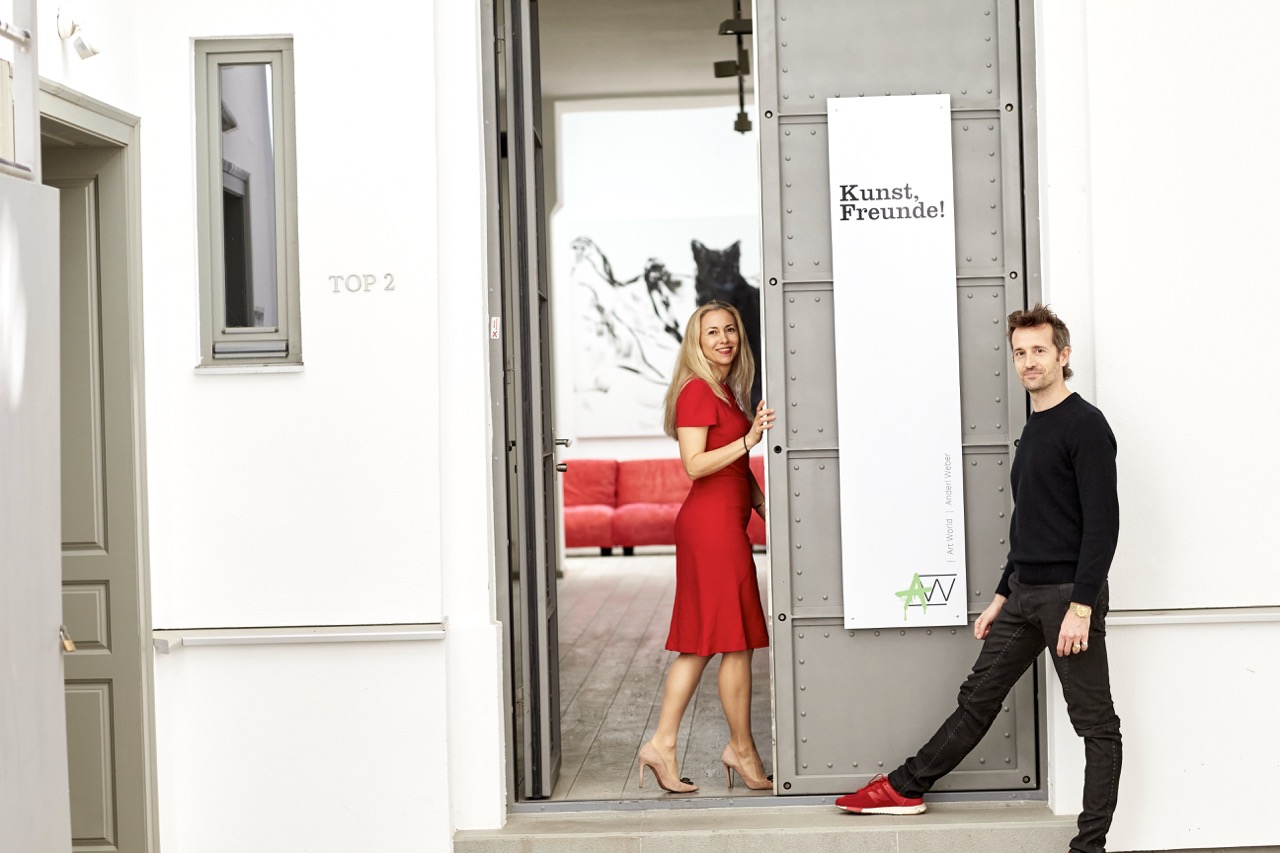
For us it is crucial that art can be seen. We do not want to collect for a depot. That is the reason why we have created the lofts—one for exhibitions (ArtSpace) and one for our own collection (CollectorsSpace). In our ArtSpace, we give artists who already are or whom we want to become part of our own collection the possibility to present themselves, show their art and connect with interested people. Doing so, we also indirectly showcase our own collection. The exhibitions are not public, but on invitation only for curated, distinguished guests. The artist is always present so that the guests have the chance to get to know him or her as this is how we collect. With our ArtSpace, we reinvented a Viennese salon where the focus is not primarily on buying or selling, but on connecting and exchange of thoughts. The relaxed atmosphere and the possibility of an encounter with the artist, though, often leads to actual sales.
How do you merge your professional backgrounds with your art collecting?
Axel represents many artists and art institutions. Kathrin also has professional connections with succession planning for artists. Legal representation in the field of art law was actually the starting point for our collecting career. In our ArtSpace, we connect artists, people from the art world, and economy, but without any direct financial interest of our own. We provide the space, the network, food and drinks, but do not take a rental fee or commission. This would go against the philosophy of the ArtSpace as it would bias us. We only (re)present artists we are 100% convinced of.
How is the experience curating these exhibitions at the art space?
Curating the exhibitions is the icing on the cake because it lets you dive even deeper into the artist’s world. Depending on the wishes and needs of the specific artist, we assist with selecting the works to be exhibited, putting together the exhibition, and hanging the pieces. We write the handouts for the exhibitions, introduce the artist and have an artist’s talk to present the artist and the artworks. This gives us quite an insight and creates a wonderful connection with the artist. We invest a lot of time and passion, but it is really worth it.
What exhibition project is now happening at the art space?
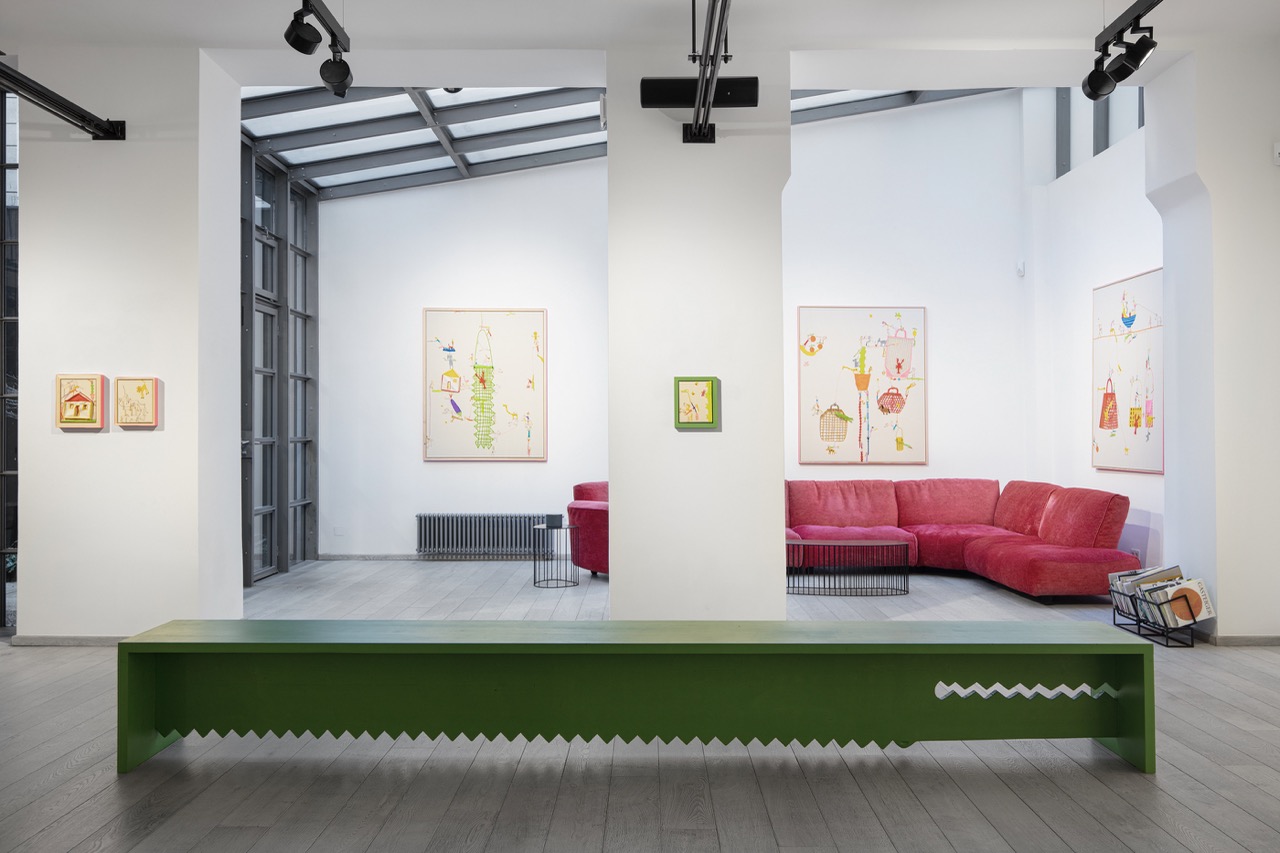
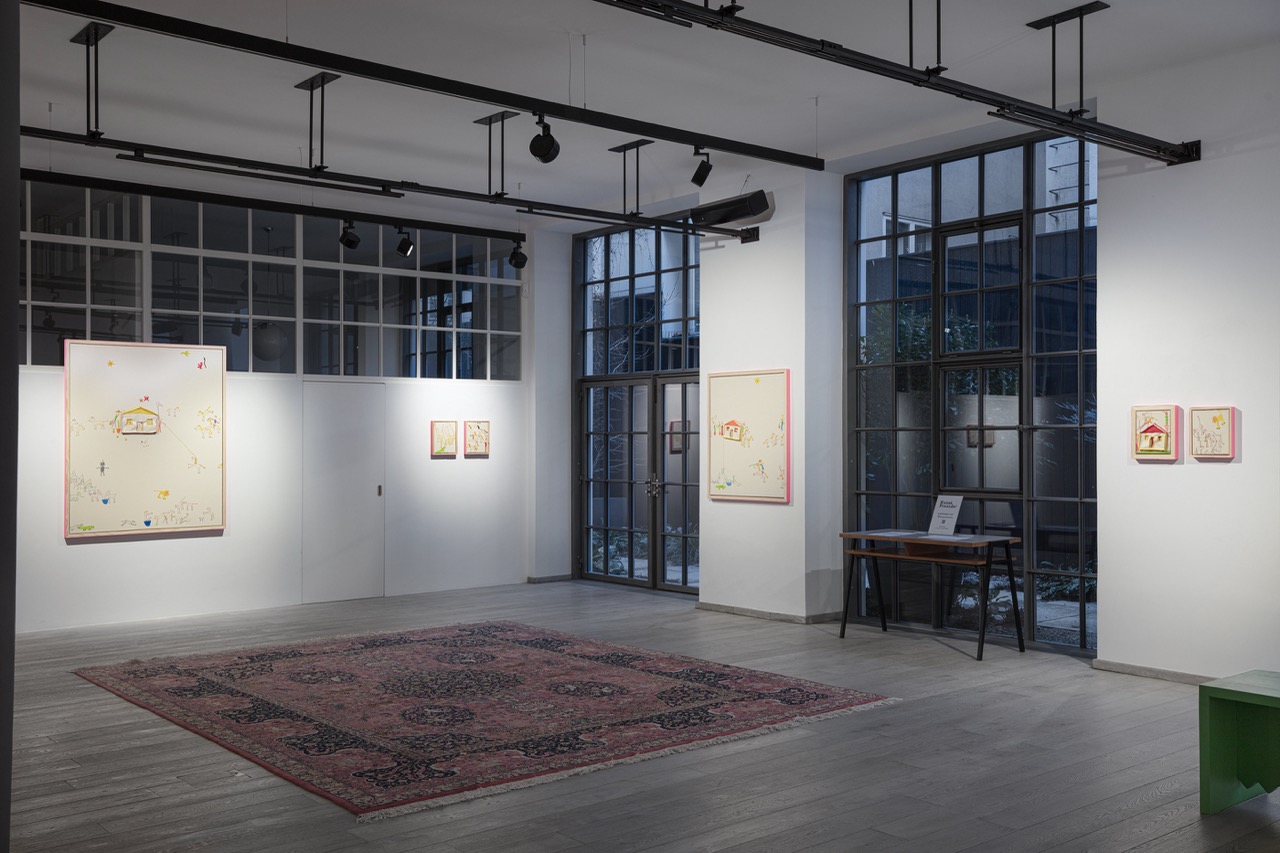
Our current show is “Guck guck” by Georg Haberler. We discovered Georg at the SPARK art fair in Vienna in March 2025, where he was exhibited by his Berlin gallery Weserhalle. His works immediately appealed to us; we were fascinated by his technique: Georg Haberler draws with a sewing machine on unprimed canvases. He then colors the motifs with acrylic paint from the back of the canvas. This allows him to create colorful figures and objects that look as if they were drawn by a child’s hand. Georg Haberler develops each detail of a picture in an intuitive working process. He uses the crocodile, a recurring motif in his works, to structure the pictures. It has become a signature animal in his work. For our exhibition, Georg also manufactured a large wooden bench as a crocodile sculpture. Georg Haberler’s works are proof of the power of interdisciplinary influence in contemporary art, as they combine elements of drawing, painting, and sculpture.
Any unforgettable story while collaborating with artists for exhibition projects at the art space?
Judith Fegerl is a great Austrian artist who is driven by the urge to make energy visible. She and her partner, the sculptor Christoph Weber, were the second artists to exhibit in our newly renovated ArtSpace. Judith asked us if she could open the walls for the exhibition, without telling us what she had planned. We politely refused and had to do so several times afterwards until the opening as Judith is very persistently pursuing her visions. On our first evening, when jointly presenting the show, Judith casually mentioned that she had wanted to install her so-called “cauter” which she usually only does in museums: Subcutaneously laid electrical wire, which burns a drawing into the wall under high voltage. We immediately regretted our refusal as the craft of and the artwork itself are extremely powerful. The result are beautiful, fine and calm lines on the wall. When we refurbished our CollectorsSpace last year, we invited Judith to implement a permanent “cauter” installation there. We are now the first private collection having such an artwork, even though it took us some time to materialize our luck.
What is your vision for the art space in the upcoming years?
We want to keep an open mind. Therefore, the project is permanently developing. We often squeeze in special ad-hoc exhibitions when the need arises. In June, there will be such an ad-hoc exhibition of the German artist Carlo Krone. His gallery intended to show him at the cancelled SPARK art fair in Vienna in March to introduce him to the Austrian market. Jan Gustav Fiedler, one of SPARK’s artistic directors, asked us if we could host his show instead.
Another idea that has been on our minds for some time is a curated group exhibition of very young artists living and working in Vienna. With some carefully selected artists, it should give our guests and us the opportunity to discover new talents.
Finally, our ArtWorld will be extended by an artist residency in a house in Southern Styria. We already had Alicia Viebrock as an artist in residence prior to the refurbishment of our CollectorsSpace enabling her to produce huge canvases for a show at Bärbel Grässlin gallery in Frankfurt. Alicia also resided in the house in South Styria last summer prior to the re-development taking place right now. Due to the good experience, we decided to have a lofty studio space facing the hills and vineyards which will be open to artists from our network.
Related: AnderlWeber Collection
Instagram: @artworldvienna
A selection of artists Kathrin and Axel collect:
Erwin Wurm
Georg Haberler
Herbert Brandl
Judith Fegerl
Martha Jungwirth
Special thanks to artist Georg Haberler for facilitating this interview.
By Ricko Leung
